Monday, 20 March 2017

Book Review: Small Great Things by Jodi Piccoult


I have never read any books by Jodi Piccoult before and in fact I have been guilty of a little prejudice against her, dismissing her as"trashy". Ironic therefore that this book which encouraged me to transcend that prejudice and pick up one of her books, is in fact all about prejudice! And I was definitely wrong about Piccoult- her writing is far from trashy and I am sure I will go on to read more of her work.

So what convinced me to try this particular book? I was hooked by the hype. I had even seen this book described as "To Kill a Mockingbird for the 21st Century". Now this is dangerous territory. "To Kill a Mockingbird" is my favourite book of all time and holds a very special place in the heart of many people. So any book making this kind of claim had better be good - very good. But it certainly works as a strap line to get people to pick up the book in the first place...

Ruth is a black midwife who has been working at the same hospital for twenty years. One day a white supremacist makes a request (granted by the hospital) that no black personnel are to care for his baby and Ruth is immediately removed from the baby's care. After a routine procedure the baby dies and Ruth is held responsible, suspended from her job and eventually tried for the baby's murder. We follow the events leading up to the baby's death, the preparation for the trial, the trial itself and the aftermath through the eyes of three different narrators : Ruth herself; the baby's father, Turk; and Ruth's lawyer, Kennedy. 

The plot is certainly compelling. I couldn't put it down and found myself reading long into the night. And the characters are on the whole, well drawn. Ruth in particular is a likeable character that the reader immediately sympathises with. We really want things to work out well for her. This novel is predominantly about prejudice and the experience of being black in America and Ruth does a good job in getting this message across to me as the reader and helping me to question my own beliefs and actions and examine my own white privilege. In this respect it reminded me very much of "Americanah" by Chimamanda Ngozie Adiche. And I was very glad that I had recently read "Homegoing" by Yaa Gyasi which helps to explain why race is such an issue in the USA and illustrates amazingly well how the effects of slavery reverberate down through the generations and are still raw and relevant today. 

Whilst I did enjoy the book and liked the fact that it was though provoking and made me examine my own conscience, I did feel that it had a couple of large flaws. The ending I felt was trite and contrived and far too much of a neat ending, with all strands tied up in a neat little bow and everyone ending up a better person. And I think this is why comparisons to "To Kill A Mockingbird " do not work - the outcomes of that book are not neat and positive and the child as narrator stops any events from seeming trite. In addition, the epilogue of "Small Great Things" seems almost rushed and the character development is non-existent so what happens to those characters is very difficult to believe. The ending of the book was a real let down for me.

However, that said, I would recommend it because it was fast paced, emotionally involving and thought provoking and an interesting dilemma to explore. It is a good book, but definitely not a great book and will not endure in the way of "To Kill a Mockingbird ".

Monday, 13 March 2017

An eclectic selection of Irish fiction for St Patrick's Day

Ireland certainly has a rich literary tradition. Knowing where to start on a booklist of Irish fiction is hard, knowing where to stop is even harder.... But here is a round - up of some great reads either set in Ireland, or written by Irish authors.

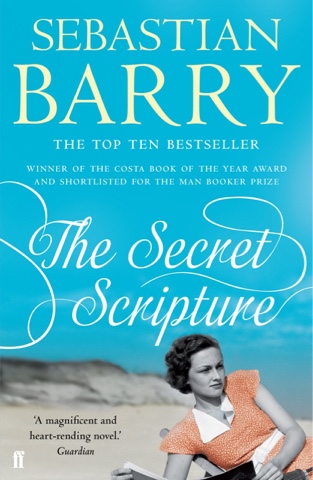
The Secret Scripture, by Sebastian Barry

This is the moving story of Roseanne McNulty who has spent many decades in a mental institution. Desperately sad and very moving, it is also utterly compelling. The reader simply has to find out what happened to Roseanne and how she ended up in the mental institution. And Barry's prose is beautiful. 

The Picture of Dorian Gray, by Oscar Wilde

A chilling classic. I am sure you are all familiar with the story line... The painting in the attic grows old, while Dorian Gray himself stays young. Definitely worth a read though as we go on a tortuous journey of guit and self discovery with the protagonist. It is also very short, so it is a classic you can tick off very quickly!

History of the Rain, by Niall Williams

This book is a glorious exploration of the English language and the impact of literature on our lives. Ruth is dying, confined to bed and desperate to find out her father's story, through family history and the incredible number of books he owns. Niall Williams writes beautifully- many pages were reread simply to savour his turn of phrase. There are many tragedies in this book and it is very sad, but there is also a good deal of humour. The people and places of the west of Ireland are so well captured. It is an affectionate and memorable novel.

The Thing About December, by Donal Ryan

This is a very touching and poignant novel that takes us through a year in the life of Johnsey, a man a little different and apart from everyone else, struggling to find his place in the world after the deaths of his parents who had always protected him from the harsher realities of life. Set admidst the boom years of the Celtic Tiger Johnsey is pursued by people desperate to buy up the land he has inherited while he flounders in grief and self doubt. The characters are beautifully drawn and there are moments of almost heartbreaking tenderness. The sense of time and place is a real feature too Ryan really captures the minutiae of life in small town Ireland.
The Wonder, by Emma Donoghue

Truly gripping, this is the story of a girl in the Irish Midlands in the middle of the 19th century who has become a wonder through having eaten nothing for months. An English nurse arrives in the village, employed to keep a watch on the girl and finds herself battling to save her life. The tension in this novel is incredible and keeps the reader turning the page, long into the night....
Rachel's Holiday, by Marian Keyes

It's easy to dismiss Marian Keyes work as "chick lit" and pass it over, but you would be missing out. Her writing is laugh out loud funny and her characters are entirely believable. This book is the story of Rachel, whose use of recreational drugs has got out of hand, and her time spent in rehab. It is funny, moving, and quintessentially Irish whilst also opening the reader's eyes to the nature of addiction and challenging stereotypes about addicts. When you have read it you will want to seek out Keyes' other books about the Walsh family. 
Dubliners by James Joyce

I studied this book at A-level, and although it is a book that benefits from being "studied", it is probably the most accessible of Joyce's work and a good starting point. If you have a study guide on hand at the same time, you may get more from it, particularly with regard to the complex metaphors and imagery but it is also worth just getting lost in the words and transported to another time and place - Dublin in the early 20th century. It is essentially a collection of short stories but there are recurring themes and characters that crop up in more than one story. It seems bleak and there are not many likeable characters, but if you want to give Joyce a go, then this is a good place to start.

The Woman who Walked into Doors and Paula Spencer by Roddy Doyle

These two books are fantastic, both as an extended character study of the eponymous Paula Spencer and as a social history of working class Dublin in the 80s, 90s and 2000s. When we first meet Paula she is an alcoholic victim of domestic abuse and the books take us on her journey as she begins to recover from both. It is an amazing achievement by Doyle to take on the voice of this female character so completely. The subject matter is fairly bleak, but there is hope and Paula's indomitable character shines through. 
And I am hearing such good things about the gritty Dublin Murder Squad series by Tana French that they are right up there on my to-read list. 
Which Irish books would you recommend?

Book Review: Nora Webster by Colm Toibin


This gentle novel tells the story of Nora Webster who finds herself widowed in small town Ireland in the late 1960s when she is only in her mid-forties.

 It is a character driven novel, fans of fast paced thrillers might be disappointed, but I certainly was not. Nora is a lovely character, likeable and entirely believable and it is a joy to spend time in her company. I would say that Nora becomes like a friend as you read the book, but it is more than that as the portrait of her life is so intimate the reader knows more about her than she would ever confide to her friends. 

Toibin writes beautifully and the details of small town life in Ireland are vividly brought to life. The cast of supporting characters are equally well drawn and animated - while you are reading you really feel that you could be living in this community, amongst these people.  

Through her interactions with her four children, her aunt, her sisters and her late husband's family we share in Nora's grief and go on a liberating journey of self-discovery alongside her. After more than twenty years of marriage she finds herself alone and her loneliness and grief are at times heartbreaking but gradually Nora learns to be her own person, answer to no-one and pursue her own interests without wondering what others will think of her. There are many moments of humour in the novel, particularly when describing the other residents of Enniscorthy and its many "local characters" and we also learn about Irish social history during the late 1960s / early 1970s. The result is a novel about grief and self discovery, but also about the place of women in society, the role of the Chruch in society and what it means to be a woman, a wife and a mother.

It is an intimate, powerful and ultimately uplifting book, although it is never trite. I loved it and now that I have finished I definitely miss Nora. Read it and enjoy being totally immersed in the thoughts of another person. Fantastic.

Saturday, 18 February 2017

Why you should definitely read some Lionel Shriver Books...

I just finished reading We Need To Talk About Kevin. This was my second time of reading it after a ten year gap and I was still blown away by it. This is probably Shriver's most famous book and it won the Orange Prize in 2005.
I'm sure you have all seen this meme before
but it completely sums up how I felt when I had finished reading this novel. So many thoughts and questions continue to circle around my head.....
The book is written as a series of letters from Eva to her estranged husband where she looks back on their family life after their son, Kevin, has killed 9 people in a massacre at his school, asking herself if she is to blame. Bleak, yes, but also wonderful. It confronts fears about parenting head on and the central premise of the book is for the reader decide whether Kevin was innately evil, or whether Eva's attitude to her son turned him into a killer. Very powerful and truly frightening.
I believe this is a book that everyone should read and Shriver's writing is exceptional. 

Her prose is sharp, acerbic and deliberately provocative, but also highly intelligent. She has a huge vocabulary and chooses words with the utmost care. I am constantly rereading passages or reaching for the dictionary but this does not detract from her message, or the reader's enjoyment, but rather enhances it. Reading her work makes me feel more intelligent and makes me appreciate the scope and beauty of the English language so much more.

Whilst I feel that We Need To Talk About Kevin is her best work I have also read and enjoyed 3 of her other novels and while they are all vastly different in subject matter they all share the trademark acerbic writing, incredible command of the English language and provocative, thought provoking topics. She is not afraid to confront unpalatable subjects head on and the result is always powerful and memorable. 

The Post Birthday World opens with a dilemma for its central character Irina. Should she stay with Lawrence, her dependable but slightly dull long term partner, or embark on a relationship with Ramsey, a famous professional snooker player? Then the novel splits into two, with alternate chapters documenting her life if she stays with Lawrence, followed by her life if she decides to leave him. The result is utterly compelling - sometimes humorous, often uncomfortable but always intimate and emotionally involving. The novel examines relationships and how our romantic choices affect every detail of lives. In this book the subject matter is a little lighter than in the others I am recommending, but it will still draw you in and leave you thinking about these characters in every spare moment you have and it still packs a powerful punch.

Game Control deals with the difficult and emotive issue of human overpopulation of the Earth. The central character is Eleanor, an American aid worker in Kenya, concerned with handing out contraception and contraceptive advice to Kenyan women. She embarks on a relationship with Calvin, whose unconventional and provocative ideas on population control got him fired from USAID. The clash in ideals between these characters makes for interesting reading and relationship development. This is the most shocking and least politically correct of her novels that I have read, but again it is so well written that you cannot help but be drawn in - and learn about demographics and epidemiology along the way. This is an acerbic look at the parts of human nature that most people prefer to ignore. Lionel Shriver is indeed a very brave author. 


So Much For That documents the marriage of Shep and Glynis and how it copes with a terminal illness in one of the parties. It sounds depressing, but it isn't. Shriver manages to discuss terminal illness, suicide, shattered dreams and crumbling relationships with wit and even humour. It is also a political commentary on healthcare in the USA and left me feeling profoundly grateful for the NHS. I realise it doesn't sound like a great read, but trust me on this one. And again, Shriver's writing is pitch perfect. Read it.

Lionel Shriver is a truly gifted writer. You need writing of this quality in your life. Trust me. Read, enjoy and tell me what you think. And if you have your own favourite Lionel Shriver novels, please tell me about them in the comments section.

Monday, 6 February 2017

Sebastian Barry wins the Costa Book of the Year Award for the secondtime!

On 31st January it was announced that Sebastian Barry, the Irish novelist and playwright,  had won the Costa Book of the Year Award for his novel Days Without End, which tells the story of two Irish soldiers fighting in American wars during the nineteenth century. It was already on my 'to read' list, but this win has catapulted it to the top! So expect a book review here soon!


I thought this would be a good opportunity to recommend some of my other favourites by Sebastian Barry.

The Secret Scripture won the Costa Book of the Year Award in 2008. It tells the story of Roseanne McNulty, an old, old woman who has lived much of her life in a mental institution. The home is about to be closed and her case is being reviewed. Barry's captivating and beautiful writing lifts the people and places from the page and the plot is completely compelling. The reader simply has to find out what happened to Roseanne. Alongside Roseanne's story the novel charts the history of Ireland in the twentieth century and becomes an interesting look at the way time and circumstance can profoundly affect individual lives. This is desperately sad - definitely have tissues handy!- but so worth reading. 


The Whereabouts of Eneas McNulty is a companion piece to The Secret Scripture. It follows many of the same characters and fills in many of the gaps in Roseanne's story, but it would also be enjoyed as a stand alone novel. The eponymous Eneas is a policeman in the British-run Irish police force after the First World War, as anti-British feeling is coming to a head. Eneas witnesses the murder of a fellow policeman and is falsely accused of identifying the murderers. As a result he is to all intents and purposes exiled from his hometown. We follow him through the his resulting travels and occasional visits home. It is sad and moving story of a lost and misunderstood soul, infused with pathos and occasional humour. So well written. Read it and savour it.


A long, long way tells us about the quandries faced by many Irish people during the First World War. We follow the story of Willie Dunne, a young Dubliner who goes off to fight in the trenches while many of his fellow Irishmen are at home fighting the British. An interesting and rarely explored perspective on the First World War and its  effects on those who fought and on those who stayed at home. This was the first novel I read by Sebastian Barry, many years ago now, but I instantly fell in love with his beautiful prose. Powerful stuff.


A couple of other Barry novels are on my 'to read' list : The Temporary Gentleman and Annie Dunne.

Sebastian Barry writes so beautifully. His prose is lyrical and captivating and will have you reading passages aloud to anyone who wil listen. He is also a master of characterisation and his characters are all entirely believable and will live on in your head for many months after you have finished these books. If you have not read any Sebastian Barry I would urge you to go out and try one now and tell me what you think. And if you already have your own Sebastian Barry favourites, please tell me about them in the comments.

Wednesday, 1 February 2017

Best books for two-year-olds

I recently wrote about our favourite books for one-year-olds so I thought it only natural to follow up with our favourite books for two-year-olds! A two-year-old will have a slightly longer attention span, so these books are slightly longer, with a slightly more detailed story, but most importantly they are fun to read for both adults and children. It is really important that you as an adult will enjoy these stories as you will be asked to read them over and over and over again.

Hairy MacLary from Donaldson's Dairy, by Lynley Dodd is probably the book I have read the most times to my children since becoming a parent nearly 10 years ago. Everyone in our family loves it. It helps that the main character Hairy MacLary reminds us of our own dog but even so this is still a fantastic book (and series - there are many more books about these characters, all sharing the fantastic exploration of language and rhyme). Reading this book aloud is a joy. Lynley Dodd enjoys experimenting with language and is not afraid to use long words that are not often found in picture books. The dogs who all meet up and go off on a walk are all lovable, individual characters and there is a repeated refrain for children to join in with. Fantastic.

Each Peach Pear Plum, by Janet and Allan Ahlberg

This is a very clever book. The rhyming text encourages children to find a particular nursery rhyme or fairytale character who is hiding in the beautiful detailed illustrations. It is fun for children to join in with the simple text, but the real fun comes from poring over the pictures and talking about the tiny details as you search for each character. A great book for language development and developing observational skills.

Owl Babies, by Martin Waddell
This is a slightly longer book and it doesn't rhyme, but the story is one that children really engage with. Three baby owls wake up one night to find their  mother has gone. The story follows them and how they deal with their anxiety - 3 different characters react in 3 different ways - and of course their mother comes back in the end. Children find this story very reassuring- mummy may go away, but she always comes back in the end. There is also a repeated refrain to join in with... "I want my mummy!" And the illustrations are beautiful.

We're Going on a Bear Hunt, by Michael Rosen

This story is perfect for joining in with and acting out. It has everything: fun, excitement, adventure and even a hint of danger... Children love to run squealing from the bear at the end! The repeated refrain will stay in your head for ever, but it is a very useful one to have up your sleeve.. particularly on walks when the children might need a bit of entertainment...."We're going on a bear hunt. We're going to catch a big one. What a beautiful day. We're not scared!"
So much fun. And so many learning opportunities from drama to geography. A real gem.

Duck in the Truck, by Jez Alborough 

Another book beloved by my children, especially my son. When he  was 2 it felt like we read this book constantly. But it is fun. Duck gets his truck stuck in the mud and many other animals with their own modes of transport join in to help him free it. The rhyming is the real star of this book and helps children to join in as you read it.

So these are our favourite books for two-year-olds. What are your favourites?

Thursday, 26 January 2017

Book Review: Running The Rift, by Naomi Benaron


Genocide is a difficult subject to write about, but Benaron has done a good job here.

The story starts with Jean Patrick, a young Rwandan boy, deciding that he will become a runner and his goal is to represent his country at the 1996 Atlanta Olympics. However, Jean Patrick is a Tutsi (the minority ethnic group in Rwanda), so the way ahead will never be smooth. We follow him through secondary school and university as he gets ever closer to his dream, running Olympic qualifying times with ease and meeting the Rwandan president. At the same time through other characters we hear of the growing unrest in the country and the underlying tensions between Hutus and Tutsis which are continually threatening to bubble to the surface. Jean Patrick, however, is content to bury his head in the sand when it comes to politics and focus on his Olympic goal. He believes that if he can just keep running and represent Rwanda in the Olympics he will have done his bit for national unity and everything will be ok. Then there comes a day in April 1994 when the Rwandan president dies and hell is unleashed within the country. Genocide (the systematic slaughter of Tutsis by their Hutu neighbours) begins and Jean Patrick and everyone he has ever cared about are caught right in the middle of it.

Obviously, with such a stark and harrowing subject matter this is not an easy book to read, but it is a rewarding one. There is a huge amount of background information, about the events in both immediate and colonial and pre-colonial history which eventually led to the genocide in Rwanda, woven into the story and I was very grateful for this insight. I knew about the Genocide and how it unfolded prior to reading this, but not the reasons why it happened. Mercifully for the reader, the section describing the genocide is relatively short but Benaron does not shy away from describing what happened and makes it very clear that people were being killed by people they had previously considered neighbours and even friends. The subject matter is dealt with with humanity and compassion without ever seeking to sanitize what happened. 

The novel ends 4 years after the genocide, with some of the main characters attempting to come to terms with what happened and move forward with their lives. There is a real sense of hope as the novel draws to a close, although the reader is left deeply affected and desperately hoping that lessons have been learnt from this bleak period in recent history.

This is a novel about genocide, yes, but it is also a novel about humanity (finding the humanity in every person), forgiveness, identity and ethnicity, and about love. I think Naomi Benaron has achieved a lot with this novel. She writes beautifully and really manages to transport the reader to the Rwandan hillsides she describes, as well as making the reader feel at home with Rwandan culture and customs. She uses two American characters to continually question the validity of her writing and even her right to write about Rwandan society as an outsider looking in. Susanne, the American woman, often makes naive statements and assumptions about Rwanda that make the Rwandans bristle as in the following exchange:

"Aren't they sweet? They go to primary school near my project slopes, when they're not too busy helping in the fields. I wish I could adopt everyone of them,"
Bea stiffened. "Probably they are happy where they are." Susanne had stumbled into another sin, but she didn't seem to notice.

The interview with the author, in my edition of the book, is particularly interesting and she explains this when asked if it gave her pause to assume the perspective of another culture:
It gave me pause everyday while I was working on the novel and it continues to give me pause today. The situation is particularly complicated because it is not just one person assuming the perspective of another. It is, in fact, a political question, because it involves the appropriation of a colonised culture by someone who stands for the coloniser. As much as I would like to refuse this label, I could not be honest with myself if I did not come to terms with it. This meant that I had to approach Rwandan culture with humility, respect and honesty; I had to be vigilant to avoid stereotypes and false representation.

Also contained within my edition is an essay by the author entitled "Fiction and Social Responsibility: Where do they intersect?" which addresses the idea of whether fiction is even a suitable medium to be discussing such huge issues as genocide, or whether it in fact demeans them. This is a very interesting and insightful read and the message of it rings true with me as a reader. We cannot turn away from these powerful, brutal and often unpalatable issues, but fiction makes more people able to grasp the reality of events such as the Rwandan genocide and therefore be affected by and act upon the injustices they read about. To quote Naomi Benaron one last time:  The literature of social justice changes the world one reader at a time.

This is a powerful, affecting and unsettling book, but you should read it.