Milkman by Anna Burns
Although the city is never named in the book, this novel is set in 1970s Belfast and tells a heartbreaking story of a city fractured by sectarian violence. The main character, known only as 'middle sister', is never named and neither are any of the other characters, but this does not stop us getting to know them and empathise with them. Middle Sister longs to remain unnoticed (by both the state and the paramilitaries who control her neighbourhood) and develops many strategies to achieve this aim, so she is upset to learn that she has unwittingly drawn the attention of a local paramilitary bigwig and thereby become the object of much unwanted gossip. As a result her life and relationships are turned upside down with some very disturbing consequences.
This novel reads almost like a thriller - the tension is constantly ratcheting up in the background, and although this tension does not actually build to any one single cataclysmic event, plenty of horrific things happen along the way. It also forces you to think about love and loss and what the fear of loss can do to a person. Burns builds a frighteningly realistic picture of life in a civil war, and how ordinary things in extraordinary circumstances first adapt and then just become ordinary themselves.
I wanted to love this novel, but I didn't. The unusual narrative style made it difficult to get into for me (it took me a very long time to read) and the way the narrative jumps across time frames was at times confusing, but this didn't stop it from being a powerful, eye-opening and ultimately worthwhile read. I think the distinctive and unusual style is what helped to make it a Booker Winner.
The Overstory, by Richard Powers
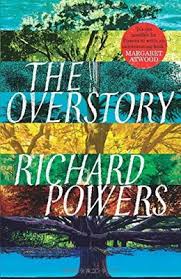
This is an unusual, powerful and affecting novel.Trees of all kinds, but especially those native to North America are the real stars of this book and they are the glue that holds a complex web of characters and stories together to forma novel. There are 9 main characters who start out as strangers, and gradually over a period of 50 years or so their lives become intertwined with trees (each for a different reason) and then with each other. It is a long book but there is strong narrative drive throughout and I found it very difficult to put down. It is fascinating, traumatic and depressing in equal measure as it forces you to reflect on the impact of humans on the planet and what that may mean for future generations. It is beautifully written and highly recommended. This is the novel I would have chosen to win.
Washington Black, by Esi Edugyan

This is a novel of great scope. It begins on a sugar plantation in Barbados in 1830 where we meet the eponymous Washington Black, a young slave, who then escapes from the plantation with the owner's brother Titch. They travel first to America, then the frozen north of Canada where Titch disappears and Washington Black is left to fend for himself in this alien world. There follows Washington's search to find his place in the world and also for Titch who he cannot stop thinking about, which takes us (through incredibly vivid descriptions and beautiful writing) to Nova Scotia, London, Amsterdam and Morocco.
I started out absolutely loving this book, but that feeling started to wane. I think that there was simply too much going on and too much story trying to be told and when I reached the end I was left feeling a little flat. It is beautifully written and the science explored along the way (from early aviation to the first aquarium) is fascinating. The descriptions of the brutality faced by Washington Black both before and after his escape are haunting and cause us to reflect on this terrible notion that slaves were no more than livestock. There is a lot to think about in this book, and the over-riding theme is of Washington Black struggling to live a fully human life in a prejudiced world. Some food for thought and some beautiful writing in a book undeniably worth reading, but not a Booker Prize winner, in my opinion.
Everything Under by Daisy Johnson

This is another powerful, original and affecting novel. The writing is lyrical and descriptive and the narrative utterly compelling as we follow Gretel in her search for her estranged mother and examines her unconventional childhood and their difficult relationships. Emotive themes of suicide, abandonment, dementia, fluid gender identity, and ambiguous sexuality are explored sensitively,and though the novel is ultimately quite dark (inevitable in a modern retelling of a Greek tragedy) it is a thing of beauty that will stay on your mind for a long time after finishing.
The Overstory, by Richard Powers
This is an unusual, powerful and affecting novel.Trees of all kinds, but especially those native to North America are the real stars of this book and they are the glue that holds a complex web of characters and stories together to forma novel. There are 9 main characters who start out as strangers, and gradually over a period of 50 years or so their lives become intertwined with trees (each for a different reason) and then with each other. It is a long book but there is strong narrative drive throughout and I found it very difficult to put down. It is fascinating, traumatic and depressing in equal measure as it forces you to reflect on the impact of humans on the planet and what that may mean for future generations. It is beautifully written and highly recommended. This is the novel I would have chosen to win.
Washington Black, by Esi Edugyan
This is a novel of great scope. It begins on a sugar plantation in Barbados in 1830 where we meet the eponymous Washington Black, a young slave, who then escapes from the plantation with the owner's brother Titch. They travel first to America, then the frozen north of Canada where Titch disappears and Washington Black is left to fend for himself in this alien world. There follows Washington's search to find his place in the world and also for Titch who he cannot stop thinking about, which takes us (through incredibly vivid descriptions and beautiful writing) to Nova Scotia, London, Amsterdam and Morocco.
I started out absolutely loving this book, but that feeling started to wane. I think that there was simply too much going on and too much story trying to be told and when I reached the end I was left feeling a little flat. It is beautifully written and the science explored along the way (from early aviation to the first aquarium) is fascinating. The descriptions of the brutality faced by Washington Black both before and after his escape are haunting and cause us to reflect on this terrible notion that slaves were no more than livestock. There is a lot to think about in this book, and the over-riding theme is of Washington Black struggling to live a fully human life in a prejudiced world. Some food for thought and some beautiful writing in a book undeniably worth reading, but not a Booker Prize winner, in my opinion.
Everything Under by Daisy Johnson
This is another powerful, original and affecting novel. The writing is lyrical and descriptive and the narrative utterly compelling as we follow Gretel in her search for her estranged mother and examines her unconventional childhood and their difficult relationships. Emotive themes of suicide, abandonment, dementia, fluid gender identity, and ambiguous sexuality are explored sensitively,and though the novel is ultimately quite dark (inevitable in a modern retelling of a Greek tragedy) it is a thing of beauty that will stay on your mind for a long time after finishing.


