Showing posts with label Roddy Doyle. Show all posts

Tuesday, 24 July 2018

8 of the Best Booker Prize Winners

The longlist for the Man Booker Prize 2018 was announced today and The English Patient, by Michael Ondaatje was recently announced as the winner of the Golden Booker, readers' favourite Booker prize winner. This got me thinking about my own favourites amongst the previous winners of this prestigious prize and I came up with my own list of the best of the Booker Prize winners (I have read The English Patient, but it doesn't make my list!).

Paddy Clarke Ha Ha Ha by Roddy Doyle

The 1993 winner is told through the eyes of Paddy Clarke, a 10 year old boy in 1960s Dublin. It is a fantastic recreation of childhood and the voice of Paddy Clarke is beautifully created. Consecutive paragraphs skip from one topic to the next totally unrelated topic as Doyle captures perfectly the speech patterns of children, together with the boundless curiosity and never ending questions.His innocence / naivety provide poignancy as we realise we (and he) are witnessing the unravelling of his parents' marriage. Desperately sad and laugh out loud funny, it also provides social commentary on working class Dublin at this time - a must-read book.

The God of Small Things by Arundhati Roy

Arundhati Roy's debut novel won the Booker prize in 1997 to huge critical acclaim. It is a much loved and often talked about book. The prose is hauntingly beautiful and a real celebration of the English language. the book follows twins Rahel and Estha, growing up in Kerala. Their beautiful and much-loved cousin Sophie Mol comes to stay and dies tragically. We find out that she dies on page 3 but don't find out how or why until the last chapter. However, the ramifications of her death echo throughout the book and affect every character. 

Life of Pi by Yann Martel

This extraordinary book won the Booker Prize in 2002. It tells the story of a boy and a tiger marooned together on a life boat and will make you question everything you thought you knew. Probably the most thought-provoking book I have ever read. 

The Inheritance of Loss by Kiran Desai

This novel won the Booker prize in 2006. The story is told through 3 main characters: 16 year old Sai, who lives with her grandfather the judge, in a dilapidated hill station in the foothills of the Himalayas in northern India, and Biju, the son of the judge's cook, struggling to find a better life in New York. This is a searing examination of class and identity, and is a beautifully written and compelling story.

The Luminaries by Eleanor Catton

The 2013 winner is a huge novel in both length and scope. It is set in New Zealand during the gold rush of the 1860s. A very clever plot structure opens with a man stumbling upon a secret meeting of twelve men all gathered together to tell their stories. It turns out that all these stories are linked (often through many intricate layers) and a compelling mystery is gradually revealed. It is a page turner - you really want to get to the bottom of this mystery (even the nature of the mystery is not immediately apparent - is it a murder, disappearance, fraud?) and the way it is revealed is original and intelligent. The structure of the novel is important, but does not overpower it. The writing is eloquent and highly evocative of time and place. A real triumph!

True History of The Kelly Gang, by Peter Carey

This won the Booker prize in 2001 and it's easy to see why. It is a novel unlike anything else, where Carey completely transports the reader to the 19th Century and the life of the notorious bush ranger, Ned Kelly. Carey has written in the voice of Kelly, uneducated and barely literate and this is what helps to totally immerse the reader in the time and place, but also means that it can be hard to get into. A page turning adventure and a mind-blowing accomplishment from this talented author.

Wolf Hall and Bring up the Bodies by by Hilary Mantel


Hilary Mantel is only the third author (and the first British author, and first woman) to win the Booker prize twice: first for Wolf Hall in 2009 and then for its sequel Bring up The Bodies in 2012. Both books centre on Thomas Cromwell: the first covering his rise, from the humble beginnings of a blacksmith's son, to becoming one of the most powerful men in England, as adviser to the King; and the second centring on the downfall of Anne Boleyn and Cromwell's part in it. The historical detail and the beautiful descriptive writing mean that Tudor London really does come alive. The novel is written almost as Cromwell's stream of consciousness and that, coupled with the authentic language and turns of phrase from the sixteenth century, can make it difficult to get into, but persevere because it is worth it. This kind of total immersion in another time and place is what I crave when reading and Mantel achieves it. I really felt like I was living in Tudor London. A fascinating insight into a turbulent period in history and a look at power and the desires, dilemmas and corruptions associated with it. I found Bring up The Bodies to be faster paced and the more absorbing read, but  Wolf Hall is still a very rewarding read, and you can't really separate the two - they need to be read together.

What is your favourite Booker prize winning novel? What would you add to this list?

Monday, 13 March 2017

An eclectic selection of Irish fiction for St Patrick's Day

Ireland certainly has a rich literary tradition. Knowing where to start on a booklist of Irish fiction is hard, knowing where to stop is even harder.... But here is a round - up of some great reads either set in Ireland, or written by Irish authors.

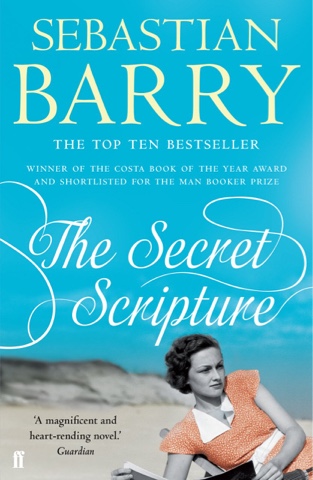
The Secret Scripture, by Sebastian Barry

This is the moving story of Roseanne McNulty who has spent many decades in a mental institution. Desperately sad and very moving, it is also utterly compelling. The reader simply has to find out what happened to Roseanne and how she ended up in the mental institution. And Barry's prose is beautiful. 

The Picture of Dorian Gray, by Oscar Wilde

A chilling classic. I am sure you are all familiar with the story line... The painting in the attic grows old, while Dorian Gray himself stays young. Definitely worth a read though as we go on a tortuous journey of guit and self discovery with the protagonist. It is also very short, so it is a classic you can tick off very quickly!

History of the Rain, by Niall Williams

This book is a glorious exploration of the English language and the impact of literature on our lives. Ruth is dying, confined to bed and desperate to find out her father's story, through family history and the incredible number of books he owns. Niall Williams writes beautifully- many pages were reread simply to savour his turn of phrase. There are many tragedies in this book and it is very sad, but there is also a good deal of humour. The people and places of the west of Ireland are so well captured. It is an affectionate and memorable novel.

The Thing About December, by Donal Ryan

This is a very touching and poignant novel that takes us through a year in the life of Johnsey, a man a little different and apart from everyone else, struggling to find his place in the world after the deaths of his parents who had always protected him from the harsher realities of life. Set admidst the boom years of the Celtic Tiger Johnsey is pursued by people desperate to buy up the land he has inherited while he flounders in grief and self doubt. The characters are beautifully drawn and there are moments of almost heartbreaking tenderness. The sense of time and place is a real feature too Ryan really captures the minutiae of life in small town Ireland.
The Wonder, by Emma Donoghue

Truly gripping, this is the story of a girl in the Irish Midlands in the middle of the 19th century who has become a wonder through having eaten nothing for months. An English nurse arrives in the village, employed to keep a watch on the girl and finds herself battling to save her life. The tension in this novel is incredible and keeps the reader turning the page, long into the night....
Rachel's Holiday, by Marian Keyes

It's easy to dismiss Marian Keyes work as "chick lit" and pass it over, but you would be missing out. Her writing is laugh out loud funny and her characters are entirely believable. This book is the story of Rachel, whose use of recreational drugs has got out of hand, and her time spent in rehab. It is funny, moving, and quintessentially Irish whilst also opening the reader's eyes to the nature of addiction and challenging stereotypes about addicts. When you have read it you will want to seek out Keyes' other books about the Walsh family. 
Dubliners by James Joyce

I studied this book at A-level, and although it is a book that benefits from being "studied", it is probably the most accessible of Joyce's work and a good starting point. If you have a study guide on hand at the same time, you may get more from it, particularly with regard to the complex metaphors and imagery but it is also worth just getting lost in the words and transported to another time and place - Dublin in the early 20th century. It is essentially a collection of short stories but there are recurring themes and characters that crop up in more than one story. It seems bleak and there are not many likeable characters, but if you want to give Joyce a go, then this is a good place to start.

The Woman who Walked into Doors and Paula Spencer by Roddy Doyle

These two books are fantastic, both as an extended character study of the eponymous Paula Spencer and as a social history of working class Dublin in the 80s, 90s and 2000s. When we first meet Paula she is an alcoholic victim of domestic abuse and the books take us on her journey as she begins to recover from both. It is an amazing achievement by Doyle to take on the voice of this female character so completely. The subject matter is fairly bleak, but there is hope and Paula's indomitable character shines through. 
And I am hearing such good things about the gritty Dublin Murder Squad series by Tana French that they are right up there on my to-read list. 
Which Irish books would you recommend?

Tuesday, 10 January 2017

Ten books I would recommend to EVERYONE

This was a difficult list to compile. As someone who reads upwards of 50 books a year, narrowing it down to recommend just a few out of all the books you have read is really hard. But these books all moved me, spoke to me, taught me things, shaped my world view or simply made me so lost in a different world that I actually grieved when the reading experience was over. And of course these books have stayed with me, some of them for many years. Some have been re-read time and again, but for others the emotions evoked still feel so raw and I still feel so involved with the characters that I don't feel I can go there again...yet. I hope you are inspired to read any you haven't already read and I hope you are as affected by these books as I have been. And please, please comment and leave some recommendations of your own!

To Kill a Mockingbird, by Harper Lee


I first read this book for my English GCSE course and I have re-read it countless times since. There is something very powerful about the story of the prejudices of a town in the American Deep South during the 1930s, being told through the eyes of a lovable, innocent 8 year old child. Reading it as the teenage product of a sheltered, rural English upbringing I realised along with Scout just how awful humans can be to each other and also started to question why this might be. This book was a real eye-opener for me at the time of first reading, but I have continued to come back to it because I love the character of Scout and the way she is not afraid to question what is happening in her hometown. It is funny, touching, moving and thought provoking - a must-read for everyone.

In Cold Blood, by Truman Capote


This is another book that I first read at school, this time as part of my A-level English course, and have revisited it many times. It tells the story of a real-life crime - the brutal murder of an entire family in their remote Kansas farmhouse - and follows the investigation, culminating in the capture and eventual execution of the two men responsible.  This book became an obsession for Truman Capote and the resulting work haunts the reader too. It is a meditation on the nature of crime and punishment and what causes people to commit such terrible acts. It is also a powerful argument against capital punishment and as such it really makes the reader question their fundamental beliefs about the value of human life. Powerful stuff. Read it.

Room, by Emma Donoghue


I think this may be the most affecting book I have ever read. Yes, that sounds like hyperbole, but I honestly could not stop thinking about the two main characters for many months after reading this, always wondering about how their lives had panned out. It is about a woman and her son who are held captive in a tiny room for many years. It sounds horrific and it is, but it goes so far beyond this. What I took away from this novel was a message of love. I felt that in particular it was about a mother's love for her son, the bond between them and ultimately what it means to be a mother. 

We Need to Talk About Kevin, by Lionel Shriver


This is another book with bleak and shocking subject matter. There's no getting away from the fact that it is an uncomfortable read, but it is also utterly engrossing and compelling. It is about a mother who struggles to bond with her child and the shocking acts that child goes on to commit. The mother always believes her child is capable of evil, but her husband refuses to believe her. It is told through a series of letters to her husband in the aftermath of the terrible event perpetrated by the child. It is very cleverly constructed and the whole novel is fraught with tension, building to a devastating and unexpected conclusion. Whilst bleak and uncomfortable to read  it is also an exploration of the nurture versus nature debate causing the reader to reflect on whether a person can be innately evil; an examination of motherhood and the role a mother plays in the development of her children; and a look at perception and the way in which events can be viewed in completely contrasting ways by different people involved in them. Uncomfortable, but thought provoking, affecting, and worth it.

The Woman Who Walked Into Doors, by Roddy Doyle (and it's follow-up Paula Spencer)

This novel tells the story of Paula Spencer a woman living with domestic abuse. It is somewhat bleak and has even been described as depressing, but the feat of writing is extraordinary. Roddy Doyle not only manages to find a totally convincing voice as a woman, but he is also able to infuse this bleak tale with life, humour and hope. Paula's voice is strong and you begin to empathise with her, like her and have hope for her future. 
In the second novel time has moved on and Paula is on the road to recovery. The two novels together show just how far Paula has come, though she is still the flawed but likeable woman from the first novel. Together the novels also make an interesting study of the economic ups and downs of Ireland during the 1990s and on to the boom years of the early 2000s, particularly through the lives of its working class people. A very emotional read (although at times laugh out loud funny) but ultimately uplifting and redemptive, finding hope and the indomitable human spirit in the bleakest of situations.

Americanah, by Chimamanda Ngozie Adiche


Themes of race and identity are uppermost in this novel, which follows the story of a young Nigerian woman who moves to America and blogs about her experiences. It is very readable and Ifemelu is a very likeable character - the reader is completely drawn into her life. It is an eye-opening account of life in America, in particular what it means to be black in America and what it means to be an immigrant in America. Powerful and unforgettable.

The Secret River, by Kate Grenville (and it's follow -up Sarah Thornhill)

This novel explores colonialism and its brutalities and injustices, along with the personal moral quandries faced by the colonialists themselves. It follows a family of early settlers along the Hawkesbury River in New South Wales, Australia, describing their struggles to cultivate the land in an unfamiliar environment, their interactions with the indigenous people already living there and the moral compromises they make in order to be successful and fit in with the settler community. It is beautifully written and the harsh existence of these early settlers in the spectacular but uncompromising landscapes of 18th century  New South Wales is brought vividly to life. While reading I was completely immersed in another time and place. There are times when the subject matter is brutally shocking and other times when it is heart-wrenchingly sad, but it is always compelling.
In the second novel, the eponymous Sarah Thornhill is one of the daughters from the original settler family. It traces her life and marriage and the guilt she feels when she uncovers the truth about how her father built his fortune. The exploration of colonial guilt and whether people truly can be held responsible for the sins of their fathers is what makes this novel stand out for me. 

The Kite Runner, by Khaled Hosseini


This is an epic story of friendship and loss and how one moment can change lives for ever. It is incredibly sad, but beautifully written and the sense of place created is so strong. It also charts the destruction of Afghanistan from a relatively developed country in the 1970s, through the Soviet invasion and Taliban rule, when it becomes a failed state. I found this aspect of the novel incredibly interesting and almost as sad as the personal story being told. It is a book that the reader becomes totally immersed in - impossible to but down.