Saturday, 5 August 2017

Book Review: The Power, by Naomi Alderman


Naomi Alderman's The Power was the winner of the 2017 Baileys Women's Prize for Fiction and it's easy to see why. This is a fantastic, subversive and thought provoking novel that will leave you questioning so many things in your everyday life and examining your own thoughts and ideals on just about every page. 

Imagine a world where everything is suddenly turned on its head and women hold all the power - literally. At an unspecified moment in time teenage girls around the world begin to discover that with a simple touch of the hand they can inflict agonising pain and even death through a jolt of electric current. There follows a worldwide revolution and society, religion and governments are utterly transformed. We follow the stories of 4 main characters: Roxy, the only daughter of a notorious London gangster; Allie, an American teenager in foster care; Tunde, an opportunistic Nigerian journalist; and Margot, an ambitious American politician, as the course of their lives is forever altered by this turn of events.

This really is fabulous satire. With her intelligent, engaging and subtly humorous writing Alderman illuminates with glaring and startling obviousness the extent of sexism in society today. By reversing the situation and showing men as "the weaker sex" she shows how ridiculous it is that women are routinely treated in this way. Although she touches on many serious and shocking practices in the world today such as female genital mutilation and sex trafficking, the subtle instances of casual sexism, as in the following observations, show with a brilliant irony how prevalent sexist attitudes are in all areas of life.

No one mentions that Olatunde Edo's videos have been such a hit because he's handsome as hell. He's half naked in some of them, reporting from the beach in just Speedos, and how's she supposed to take him seriously now, when she's seen his broad shoulders and narrow waist and the rolling landscape of obliques and deltas, glutes and pecs

There were many times when reading when I found myself with a wry smile reflecting on the truth of these subtle situations, so humorous when describing men in this way, yet so true in the media when you swap the gender roles portrayed. And particularly pertinent when many prominent women working in the British media are asking questions about why they are treated differently to their male colleagues. Does this scene describing the presenters on a local news / tv magazine show seem somehow familiar?

Matt laughs and says, I couldn't even have watched! He's very attractive, a good ten years younger than Kristen. The network had found him. Just trying something out. While we're at it, Kristen, why don't you wear your glasses onscreen now, it'll give you more gravitas. We're going to see how the numbers play out this way.

This is undoubtedly a feminist novel, and a very important social commentary, but it is also a very readable and razor sharp satire. It also touches on the nature of truth and propaganda and how easy it can be to rewrite history or at least to skew history towards a certain viewpoint. A really good novel and a worthy prize winner. Read it and hope that in the future your grandchildren will read it and wonder how it was possible that sexism could have been so prevalent in all societies in 2017. 

Friday, 14 July 2017

A Kenyan Reading List

Kenya is a fascinating country, sadly under-represented in literature. These are a few eclectic picks that make interesting reading for anyone wanting to know more about this place and its history.

The Flame Trees of Thika, by Elspeth Huxley is a fascinating memoir from a child who arrived in Kenya with her settler parents in 1912, describing their struggles to farm the land near Thika and the impact of the First World War on white settlers in Kenya. The writing is beautiful and the reader is certainly transported to the time and place. And for anyone who knows Kenya now, the comparison in lifestyles and culture between then and now is very interesting. This was written in the 1950s and there are times when it seems a little dated, but it is an enchanting read and I would certainly recommend it.


It's Our Turn to Eat, by Michaela Wrong is a non-fiction account of  a Kenyan whistleblower who started out as the anti-corruption tsar to the government. I found this book dense and heavy-going but very rewarding as an invaluable background guide to tribal effects on politics in Kenya. Really interesting and so useful to an outsider living in Kenya. A fascinating attempt to answer the decades old questions of why corruption is so rife in Africa, and when Africans might start to put wider national interests ahead of narrower tribal ones. Definitely worth ploughing through.


Circling the Sun, by Paula McLain is one of my favourite books in a long time. It is a fictionalised account of the life of Beryl Markham, the famous aviator, in particular her early life in Kenya before she became an aviator. I was utterly transfixed by it. It is a read-in-one-sitting, get completely transported  to another place kind of book. I did not want it to end. For me the magic of this book is in the setting description - the parts of Kenya that I know now are brought to life, but life 70 years earlier! Enchanting.


Leopard at the door, by Jennifer McVeigh is a relatively recently published novel describing the Mau Mau emergency through the eyes of an 18 year old girl returning home to her father's farm after 6 years at school in England to find everything changed almost beyond recognition. It is a coming of age novel that also documents the Mau Mau emergency in detail, attempting to show both sides of the story. I enjoyed it and while I did learn things about this period of Kenyan history I felt the novel was guilty of projecting modern values onto these characters from 60 years ago, with the result that the  characters and their actions were not always believable. Also, I never felt that the Africa being described was the real Africa. Overall though this is an enjoyable novel with a compelling plot and something to teach the reader about a part of history that is little documented in fiction.


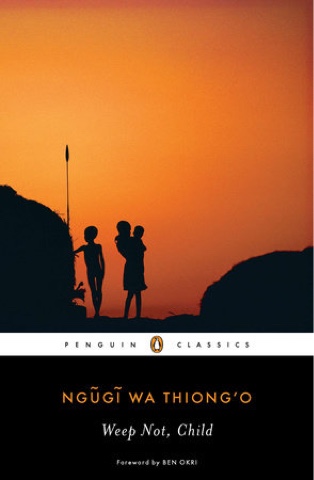
Weep not, Child, by Ngugi Wa  Thiong'o is in many ways similar to Leopard at the Door, being a coming of age novel describing life at the time of the Mau Mau emergency. However, this novel is written from the viewpoint of a young Kikuyu boy trying desperately to continue with his education as his family becomes ever more deeply involved with the Mau Mau. Insightful, personal, and a well-written page turner, this really is a must-read.


The Constant Gardener, by John LeCarre is another favourite of mine. John Le Carre is not an author I would usually pick up, but I was hooked by the film and wanted to read the book and I wasn't disappointed. As is so often the case, the book was even better than the film! Tessa, the young wife of a British diplomat in Nairobi, becomes obsessed with uncovering pharmaceutical company wrongdoing pedalling untested drugs in Kenyan slums, and is killed as a result of what she discovers. Her grieving husband picks up the cause on her behalf and travels the globe on the run, trying to expose the issue. I love the depth of relationship between Justin and Tessa and the way their love for each other shines from the page, even though their relationship is unconventional and makes many people uncomfortable. I wouldn't have expected someone known for writing spy thrillers to be a great emotional writer but the way he captures human emotions in this novel (particularly love and grief) is outstanding. Alongside this huge emotional involvement for the reader is also a fast paced thriller and some superbly evocative descriptions of Kenya. 


A Change in Altitude, by Anita Shreve tells of a young newlywed couple who embark on the adventure of spending a year living and working in Kenya. Once there they are befriended by a British couple and undertake an expedition to climb Mt Kenya with them. During the ascent an horrific accident occurs and all 4 lives are changed forever. A compelling study of how we cope with tragedy and how difficult it can be to forgive. 


Promises to Keep: A British Vet in Africa, by Hugh Cran is the light-hearted memoir of a vet living and working in Nakuru for over forty years. It is anecdotal in tone and highly entertaining, whilst also providing some social commentary. Cran has a great knack for describing the sights, sounds and people of Kenya and this book is highly recommended. Very enjoyable.


Do you have any books you would add to this list?


Monday, 3 July 2017

3 Fantastic series to start your children on chapter books

The transition from picture books to chapter books can be a daunting one for many parents. When should we start? What should we start with? are common questions around this subject. We all want our children to enjoy reading and I firmly believe that the key to this is to read them quality fiction from as early an age as possible. I began reading chapter books aloud to my children when they were about 4 and  a half years old. And these series are the ones we started with. A series is especially engaging because you always want to read the next book. These series all have in common strong, likeable main characters; emotionally engaging or exciting storylines and high quality writing. My older children have enjoyed reading these themselves at the same time as I am reading them aloud to younger children. Do seek them out. You will enjoy reading them and your children will absolutely love the characters and  be desperate to know what happens next...

The Sophie Stories, by Dick King Smith
Sophie is probably my favourite character in children's literature. She is 4 years old when the series start, and "small, but determined". She is a wonderful character for girls to relate to: confident, funny, adventurous, loyal and determined, and my son liked her too. She absolutely loves animals and her ambition is to become a lady farmer. These books are humorous and heartwarming, with a fabulous and lifelike family dynamic portrayed throughout. A real joy. I am sure Sophie will become a big hit in your household too. A perfect introduction to chapter books.
Sophie's Snail is the first book in the series.

The Anna Hibiscus Stories, by Atinuke are a recent discovery in our family, recommended by a friend here in Kenya and we have spent the last 3 months or so reading them at bedtime with my 4 year old daughter (although my 10 year old daughter and 7 year old son have been hooked too!). We were all very sad when we reached the end of the series. I cannot praise them highly enough and believe they should be read by all children, everywhere. Anna Hibiscus lives with her extended family in a large white house in an African city (while never made explicit, it would seem to be Lagos, Nigeria). Her mother is Canadian and her father is African. The series begins by introducing her family and giving the reader a feel for life in the large white house and then moves through various adventures such as singing for the president, visiting her grandmother in Canada and going to stay in the African village where her grandparents were born. Anna is another strong character that children can relate to and look up to: she is compassionate, friendly, funny and very likeable. 

These books portray Africa so well, and do not shy away from the difficulties of living on the African continent - nothing is picture-book perfect in these stories. The wealth gap in Africa is dealt with in a sensitive and age-appropriate way throughout the series and Anna's compassionate nature comes to the front to help people less fortunate than herself many times. This means that there are many sad moments in the books, and many talking points as you are reading them with your children.

For us living here in Africa the books talk about day to day life and what it is actually like to live here and for African children this is a fantastic series with a heroine who is just like them, someone they can really relate to. There is not much children's literature out there set in modern Africa with African characters, so this series is a real gem. And for children living in the rest of the world these books show them what Africa is really like (not the mud huts, lions and famine view that is so often perpetuated) with all its colour, noise and contrasts. 

Please, please, please find them and read them to your children. You will laugh, you will cry, you will learn about modern Africa and you will absolutely love the little girl that is Anna Hibiscus.
Anna Hibiscus is the first book in the series

The Akimbo Stories by Alexander McCall Smith 

These are also set in Africa and do not need to be read in any particular order. Akimbo lives in a game reserve where his father is a ranger and the series follows him through many adventures trying to protect the wildlife and the habitats he loves so much. Each book focuses on a different animal: lions, baboons, snakes, elephants and crocodiles and they contain a lot of information about each species. They are fast paced and adventurous and there are some scary parts (think snakebite, Ivory poachers etc,) and again, plenty of talking points. My children said that Akimbo and the Snakes was their favourite as they learned the most from this one.


A real plus point to the Akimbo books for me is that they contain a male leading character, as well as being very well written, exciting and appealing for children and enjoyable for grown ups to read aloud. I have really struggled to find another series that is as engaging for my son. There are many books and series out there that appeal to him, with action and adventure and male characters, but the writing is not as good, the plots are formulaic, the characters are 2-dimensional  and they are just not as appealing as an adult to read aloud, or even for him to want to return to again and again (an exception to this is the "How to Train your Dragon" series by Cressida Cowell, but these are not really suitable as first chapter books).We all know that good literature cries out to be re-read and the series' I have mentioned above have all been read and enjoyed many times in our house. I would really appreciate it if you have any recommendations for quality series' that appeal to boys! Please!


10 of the Best Julia Donaldson Books out there.

Julia Donaldson is just amazing. She is without a doubt our family's favourite author for birth - pre-school aged children and I sometimes wonder what children used to read before she started writing! There are often multi-buy deals available for her books on Amazon and she has written so many books that choosing from the range can be a little daunting. So I have put together a selection of our ten favourites for you.

The Gruffalo is probably Julia Donaldson's best known book and is deservedly a classic! The tale of the clever mouse who outwits the fox, owl, snake and Gruffalo is funny, witty enough for adults to enjoy  and has plenty of repeated refrains for the children to join in with. Great stuff.


Monkey Puzzle tells the story of a little monkey who has lost his mum. We follow him on a rhyming journey through the jungle as a butterfly helps him to look for her. There is plenty of humour and crossed wires as the butterfly continually shows him the wrong animal and many opportunities for vocabulary building as your child can name the animals the butterfly shows the monkey after joining in with the repeated refrain "no, no, no, that's a.." And of course, there is a happy ending!


Room on the Broom is another well known book by Julia Donaldson which has been made into a tv film, shown at Christmas a few years ago. This exciting story contains witches and dragons and a broomstick full of animals who manage to outwit the dragon and rescue their witch. This is a really good book for developing awareness of rhyme with children and they will really enjoy filling in the rhyming words at the end of each line ones they are familiar with the story.


A squash and a squeeze is a hilarious tale with a moral too. The old lady in the story learns to appreciate what she has when an old man gives her some unusual advice about how to make her tiny house seem bigger. This one had my kids laughing out loud.


The Smartest Giant in Town is the heartwarming tale of George, a giant who kits himself out in smart new clothes and then, on his way home, gives away everything he has to help the people that he meets. It has a lovely message about helping others AND a jaunty song to sing on every page - such good fun to read and the kids absolutely love the song!


All the above books were illustrated by Axel Scheffler whose pictures compliment the stories perfectly.

The next two books are illustrated by Lydia Monks, whose illustrations always contain a liberal helping of glitter to add sparkle and texture...

What the Ladybird Heard is the story of a farmyard full of animals who, with the help of a shy ladybird, foil the plan of two villains hoping to steal the fine prize cow. Children enjoy joining in with the animal noises and are most amused when the animals trick the would-be thieves.


The Singing Mermaid is currently the favourite book of my 4-year-old daughter and has been for many months. It tells the story of a mermaid who is tricked into joining a circus and then finally manages to escape with the help of her circus friends and a very clever seagull. 


Jack and The Flum Flum Tree is illustrated by David Roberts and is my personal favourite of Julia Donaldson's books because it is a very witty tale with a humour that both adults and children can enjoy. Jack's granny develops an illness that can only be cured by the fruit of the rare and exotic Flum Flum tree so Jack and his friends must set sail to find it. On the way they face many mishaps which are overcome using the bag of eclectic objects that Granny gives them as a farewell gift. And the best bit for the children is that the repeated refrain for them to join in with contains the phrase "Don't get your knickers in a twist"! Great fun!


Chocolate Mousse for Greedy Goose is illustrated by Nick Sharratt and is a simple rhyming tale of some animals preparing and eating a meal. My kids loved it because of all the funny things that the animals say to each other. They  really enjoyed joining in with it after a few readings, and had soon learnt the whole thing by heart! It is also great for building vocabulary and introducing adjectives.


One Ted Falls out of Bed, illustrated by Anna Currey, is a counting book following ted's attempts to get back into bed, with the help of all the other toys in the nursery. It has a strong rhyme, making it easy for children to join in with and really beautiful detailed illustrations. I like it because it is a counting book with a narrative, which makes it much more fun to read.

What are your favourite Julia Donaldson books?

Wednesday, 21 June 2017

6 Ian McEwan books I would recommend to everyone

Today is Ian McEwan's birthday. He is a well loved and prolific author writing on a huge range of topics and amongst his back catalogue you are sure to find a book you love! Here are my top 6 recommendations - today is as good a day as any to pick one up and give it a try...

Atonement is probably his most famous novel and it is definitely my favourite. It spans many decades, following the life of Briony Tallis. We first meet her as a thirteen year old in 1935, when she witnesses an encounter between her older sister and their housekeeper's son. The way she interprets what she witnesses from afar and her actions in the aftermath have far reaching consequences for all 3 of them and she will spend the rest of her life trying to atone for her actions. This is a very powerful novel about love, war and regret, as well as an interesting look at how differently actions and words can be interpreted. Very moving and highly recommended.


Enduring Love is utterly compelling from the very first page - very difficult to put down and may well be read in one sitting. Following the story of Joe Rose whose whole life changes when a ballooning accident forces a chance encounter with Jed Parry who almost immediately becomes obsessed with Joe. Rose's life, relationships and sanity quickly begin to crumble under the weight of this obsession. McEwan is a master at creating tension and an atmosphere of foreboding, paranoia and suspicion. A very clever and affecting novel.


The Child in Time won the Whitbread Award in 1987. It opens with every parents worst nightmare when a father takes his three-year-old daughter to the supermarket and she goes missing. What follows is a heart wrenching exploration of bereavement and grief as well as a reflection on the nature of childhood. Powerful and affecting stuff.


Saturday is a complex and reflective novel following a day (Saturday 15th February 2003) in the life of neurosurgeon Henry Perowne. McEwan is accomplished at ratching up the tension in this slow-burner which is beautifully written and provides a window on the world in 2003 - definitely valuable as social history, and definitely worth a read.


The Children Act tells the story of  Fiona Maye, a high court judge caught up in a number of complex cases of family law, whilst also facing a crisis in her personal life. The themes explored are common to many of McEwan's novels: aging, obsession and stagnating relationships, but the subject matter is very thought provoking and the reader is frequently invited to examine their own morality. An interesting and compelling read.


On Chesil Beach is a very short novel, but its emotional intensity makes it an unforgettable one. It tells the story of  Edward and  Florence, arriving on the Dorset Coast on their wedding night in 1962 as virgins, and their fears of what is to come. It is at times almost unbearably poignant and you cannot fail to be moved by this story of awkwardness and miscommunication. It is beautifully written and brilliantly observed. Fantastic stuff.

What is your favourite Ian McEwan novel? Have I missed any that you would recommend?


Wednesday, 24 May 2017

Book Review: Stay With Me, by Ayobami Adebayo

This is the only book I have read (so far) from the shortlist of this year's Baileys Prize for Women's Fiction, and is the debut novel of this young Nigerian author. 

Set against the backdrop of social and political upheaval in 1980s Nigeria (with occasional flashes forwards to the early 21st Century) this novel tells the story of the marriage of Yejide and Akin, two young people who meet and marry at university. Despite being deeply in love their marriage is not blessed with a child and pressure is mounting on Yejide, from her in-laws,to provide them with a grandchild. Wider pressure from society grows too and their marriage comes under increasing strain. 

Although Yejide is the main character the story alternates between chapters from her viewpoint and that of her husband, Akin, and it is Akin's chapters that reveal the most surprises to the reader. His chapters are important for the plot and moving the story forward, whereas Yejide's chapters are important for character development and the emotional involvement of the reader. And this is certainly an emotional book. Yejide is a likeable character and the reader is drawn completely into her world and her head. We share in her love, her hope, her disappointment and her grief, and these powerful emotions are explored over and over again throughout the novel. 

The setting in Nigeria in the 1980s and present day provides interesting insights into Nigerian life, particularly the contrast between contemporary Western lifestyles and values and more traditional Nigerian lifestyles and the way in which these two can mix. There is also some interesting information about the political background of Nigeria but the real joy of this novel is Yejide's story and the emotions it evokes in the reader - a meditation on love, grief and the role / value of women in society. Powerful and emotional it is definitely worth a read. It will stay with you (and, as an added bonus, the hardback edition of the book is really beautiful too - I especially love the yellow pages!).


Friday, 12 May 2017

4 (very) long books that are definitely worth the effort...

Long books can be a little daunting. Especially if you get your reading material from the library, where most of the new books are in hardback. I borrowed a couple of these titles from the library and actually had to return them unread because the hardback copies were just too unwieldy! I often fall asleep holding my book and there was no way I wanted to get bashed in the face by one of these bad boys. But I got round to reading them eventually and believe that you should too as they are completely and utterly worth the effort. And yes, there is effort involved in reading books this long - not only the time commitment but also the physical effort...if you like to read lying on your back, just holding the book up can be tricky and you reach a certain point in the book where keeping it open with your thumb becomes really tiring! And books of this length are less portable - it was a struggle to fit my copy of A Little Life inside my handbag. Persevere though - you will be rewarded!

A Little Life, by Hanya Yanagihara (720 pages)

I have just finished reading this book and it really should come with a warning. It is one of those books that consumes you completely - you cannot get the characters and their lives out of your head. On the surface, the novel is not about much. It follows the lives and friendship of 4 college classmates over nearly more than 30 years as they leave college, move to New York and begin and develop careers and relationships. The pivotal character of the novel is Jude, a lawyer haunted by his traumatic past. All his interactions with the other characters are shaped by his past and his friends' lives are also profoundly affected. It is a heart-wrenching novel that will leave you raw and weeping as it explores love, grief, the nature of happiness and the legacies of childhood. Have some tissues handy.

Wolf Hall, by Hilary Mantel (674 pages)

This novel won the Booker Prize in 2009. It is another book to get totally immersed in and transported back to the court of Henry VIII,where we follow the rise of Thomas Cromwell, from the humble beginnings of a blacksmith's son, to becoming one of the most powerful men in England, as advisor to the King. The historical detail and the beautiful descriptive writing mean that Tudor London really does come alive. The novel is written almost as Cromwell's stream of consciousness and that, coupled with the authentic language and turns of phrase from the sixteenth century, can make it difficult to get into, but again persevere because it is worth it. This kind of total immersion in another time and place is what I crave when reading and Mantel achieves it. I really felt like I was living in Tudor London. A fascinating insight into a turbulent period in history and a look at power and the desires, dilemmas and corruptions associated with it. A worthy Booker winner.

The Luminaries, by Eleanor Catton (848 pages)

Another Booker Prize winner, this time from 2013. This is a huge novel in both length and scope. It is set in New Zealand during the gold rush of the 1860s. A very clever plot structure opens with a man stumbling upon a secret meeting of twelve men all gathered together to tell their stories. It turns out that all these stories are linked (often through many intricate layers) and a compelling mystery is gradually revealed. It is a page turner - you really want to get to the bottom of this mystery (even the nature of the mystery is not immediately apparent - is it a murder, disappearance, fraud?) and the way it is revealed is original and intelligent. The structure of the novel is important, but does not overpower it. The writing is eloquent and highly evocative of time and place. A real triumph!


A Suitable Boy, by Vikram Seth (1504 pages)

I am pretty sure this is the longest novel I have ever read, but it does not drag or seem overly long. In fact I did not want it to end. The reading experience was fantastic, and the writing style made it a surprisingly gentle and easy read. There is a huge cast of characters but none of them seems extraneous and the setting of post independence India as the first free elections are looming is so beautifully evoked that I really felt I was living there alongside these characters and I truly felt bereft when I had finished. The title of the novel is important as we follow Lata's search for her ideal husband, both according to her own ideals and what her family considers suitable. The political backdrop adds another dimension to novel as we learn about the tensions between different classes, castes and religions in this new nation struggling to find its place in the world. It is truly fantastic writing and a book to be savoured. It may be long, but it will make you laugh out loud, and it will move you to tears, and you will not want it to end.

What very long novels that are too good to miss would you add to this list?