Thursday, 7 May 2020

Second World War Fiction for VE day

Friday 8th May is the 75th anniversary of VE day. That seemed like a good time to talk about some of the great fiction available about the Second World War. There is so much out there on this subject that this was not an easy list to compile, but I have to tried to include books that I would recommend, with varied settings and viewpoints. So, in no particular order, here goes:

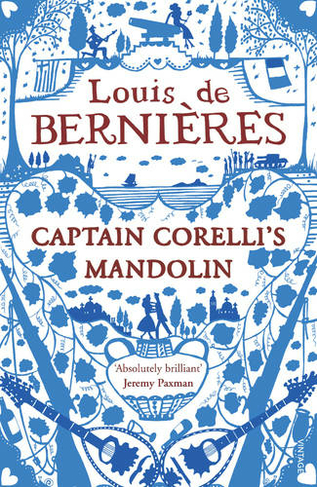
Captain Corelli's Mandolin by Louis de Bernieres
Captain Corelli’s Mandolin is set on the Greek island of Cephallonia during the Second World War. Before I read this book (admittedly I was probably only 20 at the time!) I did not even realise that Italy had occupied Greece during the war, so this was fascinating for me. It is primarily a love story detailing the love between an Italian army captain and a local Greek girl (who was already engaged to a local man who had gone away to join the Greek Partisans). Love is complicated enough during wartime as many of these books recommended here will attest, but  imagine the difficulties for these 2 lovers who are on opposing sides of the conflict. They must deal with their conflicting personal and political allegiances as  the war carries on around them, bringing with it tragedies and atrocities that affect every one in the small Cephallonian community. Louis de Bernieres is a fantastic writer and he manages to write about some truly horrific circumstances without ever leaving the reader in despair. The novel is often humorous and always full of love. The characters are likeable and human. This is a beautiful novel which leaves the reader missing the characters after they have finished. It is one of my favourite books ever - can't recommend it enough.

The Narrow Road to The Deep North by Richard Flanagan
This novel won the Booker Prize in 2014 - deservedly so. The book is mainly set in a Japanese POW camp on the Burma Death Railway where Australian surgeon Dorrigo Evans in imprisoned and looks back on his life before the war. This is not an easy read as it describes the inhumane conditions of these camps but it is a powerful read which examines the human capacity to endure and to love. It is very affecting and provides much historical insight for the reader into the Second World War in South East Asia. Well worth reading, although it is not a novel to be 'enjoyed'.

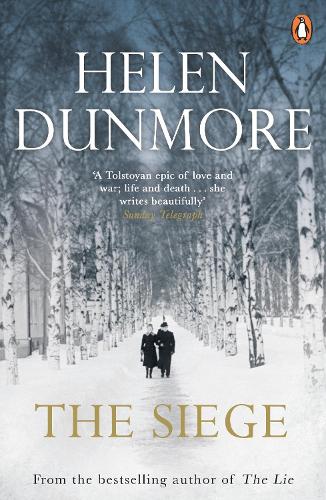
The Siege, by Helen Dunmore 
This novel is set during the siege of Leningrad (when Leningrad was besieged by German forces on the Estern front in WW2), beginning in September 1941, and tells the story of 2 couples and their desperate fight for survival under siege in an unimaginably cold winter. The characters are pushed to the limits of their endurance and while this novel is a depiction of the horrors of war and the far-reaching consequences it has for the lives of ordinary people, it is also a celebration of life, of love and of survival. It is truly astonishing. I am ashamed to say this is a part of history I knew nothing about, but this fantastic novel opened my eyes to this incredible event and had me rushing off to do my own research. Detailed and evocative and deeply moving - not to be missed.

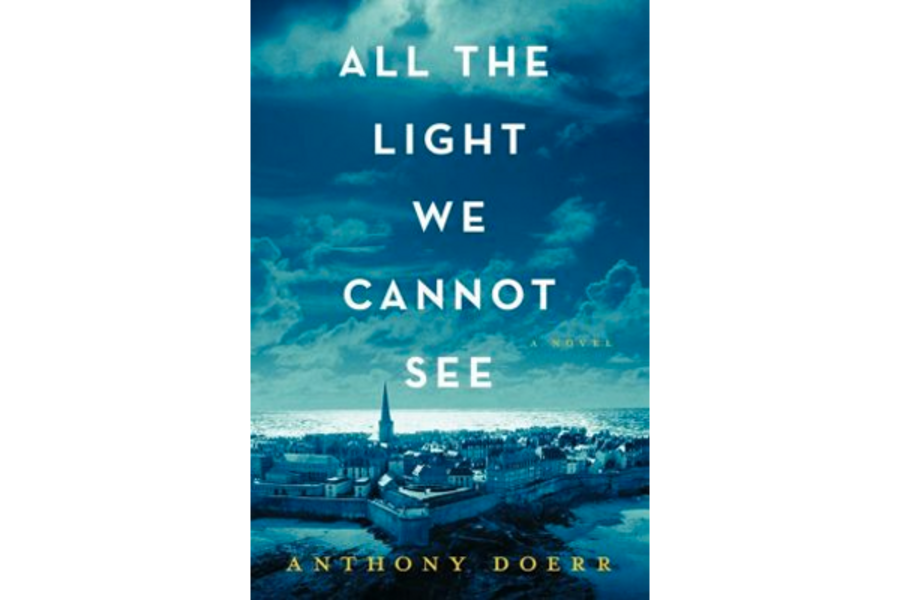
All the Light We Cannot See, by Anthony Doerr
This is an atmospheric and moving depiction of life in occupied France during the second world war - specifically St Malo, through the eyes of a young blind French girl, Marie Laure. At the same time it is the story of a young German orphan, Werner, who is fascinated by the workings of his radio and grows up to become a master at building and fixing radios, which leads to him becoming a tracker of the resistance in St Malo, ensuring that his path crosses with that of Marie Laure. It is beautifully written and deeply moving, with an usual structure that moves between the 1930s and occupied St Malo in 1944. It effectively explores the good people try to do in their lives and it will certainly make you think.

Everyone Brave is Forgiven, by Chris Cleeve
I read this book a couple of years ago and intended to write a review at the time, but was left feeling too raw afterwards. It is one of those books that gets the reader completely emotionally involved and there is some heart-wrenching stuff involved as well as some particularly horrifying descriptions of the Blitz, so be warned. That said, I was affected and moved by the experience of reading it which is why it makes it onto this list. As with his other novels Chris Cleeve has written an addictive and compulsive book - you cannot put it down. The story centres on 3 main characters - Mary, Alastair and Tom - and their wartime experiences. It is a story of bravery, love and friendship as well as the effects of war. It is very different from Cleeves' other work, but well worth a read.

Enigma, by Robert Harris
As the title suggests this fast-paced thriller is based around the code breaking events at Bletchley Park during the Second World War. Robert Harris has the rare ability to tell a story that educates as well as absorbs. Too often you can come away from a historical novel feeling that you have been bombarded with facts and information without getting to know the characters or being immersed in their world. Not so here - while the reader undoubtedly learns about what happened at Bletchley Park and how instrumental that was to the war effort, they are also seamlessly transported to the 1940s Britain that is so artfully evoked. Great stuff.

The Night Watch, by Sarah Waters
This tells the story of London through the 1940s through the eyes of 4 main characters; Helen, Kay, Viv and Duncan. Each character has a backstory and their stories connect in subtle and sometimes startling ways. This is a very moving story about relationships set against the backdrop of the Blitz and the ordinary acts of heroism encountered every day. Beautifully written, this novel is both a thrilling page turner and an emotional rollercoaster.
What Second World War fiction would you add to this list?

Wednesday, 25 March 2020

Book Review: Africa, Amazing Africa, by Atinuke

Anyone who has visited my blog before will know I am a big fan of books about Africa. And I am a really big fan of books for children about Africa. And I am an even bigger fan of books about Africa that help to dispel the media and education- perpetuated misconception that Africa is a simply a place full of mud huts and poverty in desperate need of Western aid. This beautiful children's book ticks all those boxes, and some! I can't recommend it enough.
It is a book for young children (5-8 years) and has a simple format - 1 page of information about every country on the African continent. The Nigerian born author has found a unique interesting fact about each country and writes a short paragraph for each one, showcasing the diversity of the continent. While she does talk about poverty she also makes sure to point out that much of Africa is modern, dynamic, urban and forward thinking.
The illustrations by Mouni Feddag are gorgeous and there are fantastic maps to refer to as you read. My daughters aged 4 and 7 love this book. We read about one country each night at bedtime, and they have enjoyed searching for the countries on the map. Both girls have also taken this book into school, eager to share with the class the information about the country where they used to live.
This is a really great book -beautiful to look at and very informative.

Sunday, 15 March 2020

Book Review: The Mercies by Kiran Millwood Hargrave

The Mercies is Kiran Millwood Hargrave's first novel written for adults, after several successful YA and children's novels.
The Mercies is set in northern Norway in the seventeenth century, beginning with a terrifying storm (a real event that occurred on 24th December 1617) that kills very nearly the entire male population of the island of Vardo. The women left behind must fend for themselves in the harsh landscape north of the arctic circle. Eighteen months later a new commissioner arrives, summoned from Scotland to impose civilisation and order in this remote place. He brings with him his new wife, Ursa, a cossetted city girl from Bergen, who quickly befriends local girl, Maren.
The developing friendship between Maren and Ursa is one focal point of the novel and the reader comes to care deeply for the fate of these 2 young women, a fate which is bound together ever tighter as the novel progresses. At the same time, the real purpose of the commissioner's posting becomes clearer - to enforce sorcery laws brought in by the King to unify Norway in the Lutheran Church - and a literal witch hunt ensues. 
This book is by turns tender and terrifying. The setting is hauntingly evoked - I am always amazed at the power of books to transport readers to  a time and place so completely alien to their own experience and this book does that wonderfully - and the characters are incredibly real. It is atmospheric and builds to a dramatic and brutal conclusion. I flew through the final third of the book  desperate to know the outcome. It is made all the more chilling knowing that the novel is based on real events. There were witch trials throughout the Finnmark region in 1621 that resulted in the deaths of 91 people. I love fiction that builds on real events and this affecting novel left me thinking about the fate of the real people at the heart of it and inspired me to find out more about the history of witch trials in the seventeenth century.
Read this book and be thankful that your daughters are free to be strong independent women without fear of persecution. 

Tuesday, 4 June 2019

Jane Harper, a crime writing force to be reckoned with.

A while ago I published a review of The Dry, Jane Harper's debut novel which blew me away (http://thisreadingmummy.blogspot.com/2017/03/book-review-dry-by-jane-harper.html ).
Since then  she has written 2 more books which are just as good. Each novel has a different setting and a different set of characters though the setting is always an isolated area of rural Australia. In each novel it is her description of the setting and dramatic evocation of the harsh and dangerous landscape which lifts her writing away from conventional crime writing and gives it an extra dimension. All the novels are exceptionally well plotted with a seemingly impossible conundrum to solve that is revealed cleverly, allowing each character to be a suspect for a while before drawing to a satisfying and plausible conclusion. The suspense and tension created is electrifying - I could not put any of these books down - reading long into the small hours of the night. 

Force of Nature centres around a corporate team building weekend in a remote nature reserve. A team of 5 women set out on a hike and only 4 return to the rendezvous point. What happened to the 5th woman? The missing woman, Alice Russell,  is the whistleblower on the current case of Aaron Falk (the detective from The Dry), a money laundering investigation, so Aaron and his colleagues begin looking into her disappearance. It soon transpires that the relationships between the 5 colleagues were filled with mistrust and suspicion and everyone has a motive for wanting Alice out of the way.

Again, the setting takes centre stage as Harper deftly shows the reader just how frightening it would be to be lost in the impenetrable forests she describes.


The Lost Man is Harper's latest offering. I just finished reading it and I literally could not put it down.  It is a little different from her previous two novels in that Aaron Falk does not feature. In fact there are no real detectives or police investigation at all. Instead the focus is completely on a handful of characters within the Bright family. 

The novel opens with Cameron Bright being found dead on the boundary of his vast cattle station in outback Queensland. The autopsy confirms that he died from dehydration having walked away from his vehicle. The police believe he walked away deliberately, opting to end his own life, but the family thinks differently. His brother Nathan (Cameron's closest neighbour, but still a 3 hour drive away) ends up investigating the circumstances of his death and working out what actually happened. There are few characters and therefore few suspects owing to the geographical isolation of the setting, which is vividly brought to life. Again, Harper uses the setting to build tension as the remoteness and isolation increases the pressure on the characters and begins to show the cracks in the outwardly perfect family life of the Brights. Everyone is suspicious of everyone else and the reader is cleverly led to suspect everyone in turn before we find out what took place. This is a fast paced thriller with likeable, believable characters and an incredibly well described setting that completely drew me in as a reader. Definitely my favourite of her novels so far.


Jane Harper writes thrillers that are so much more than thrillers. I can't recommend them highly enough and I can't wait to read what she writes next!

Saturday, 1 June 2019

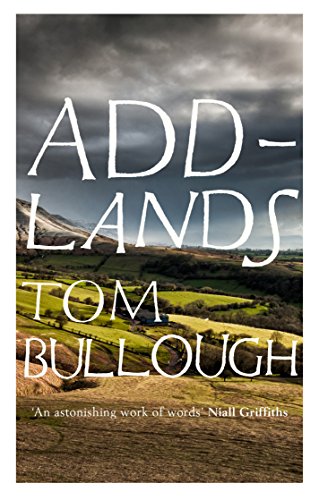
Book Review: Addlands, by Tom Bullough

This was not a book I had heard of before I stumbled across it in a local bookshop. It was truly a serendipitous find.  I bought it because it was a book about the local area (well, somewhere about 15-20 miles from where I live) by a local author,  and I'm very glad I did. It is a totally absorbing read, lyrically beautiful and with the power to totally immerse the reader in the life of the isolated valley in mid-Wales where it is set.

It is huge in scope (but not in length, being a very manageable 293 pages long) following the fortunes of the Hamer family over 70 years and 4 generations as they scratch out a living from their hill farm. The characters are brilliantly brought to life and the changing seasons of the farm and the hillside on which it nestles lyrically described. The language is often poetic as it seeks to show how the place where these characters live is just as much a part of them as any other character trait.

Etty is a young woman, already pregnant when she marries Idris Hamer and comes to live on the remote Funnon Farm, on Llanbedr Hill near Builth Wells. She is the rock around which the novel revolves, the anchor to which all the other characters are moored, and the reader quickly grows to love her. Her son, Olly is a different matter altogether, wilder and more unpredictable yet also completely rooted to the farm and his mother.  Olly was born in 1941 and we follow his life from then until 2011 -  over a period of monumental change and modernisation for this part of mid-Wales. We see the closing of the local railway, the gradual moving away from the hold of the methodist church on the local population, the arrival of electrictiy, the move from horse power to tractors and the life-changing foot and mouth outbreak of 2001. All these upheavals and the personal triumphs and tragedies of the characters are contrasted with the quiet natural rhythms of the landscape which remain the same year on year.

It is a beautiful and affecting book, which will make you laugh and cry. The local dialect is cleverly employed, helping with the total immersion of the reader in this landscape and bringing the characters vividly to life. It is a haunting examination of continuity and change: how the landscape we live in makes us who we are and how the last century has changed us all.

When you have finished reading if you are anything like me you will yearn for the hills of Radnorshire and will be thinking about the characters and what the future holds for them for a long time to come. Highly recommended.


Friday, 8 March 2019

3 Extraordinary Books about the extraordinary lives of ordinary women, on International Women's Day.

On International Women's Day I thought it would be an idea to share some of my favourite books celebrating women. There are so many to choose from that I got a bit bogged down thinking about it, so in the end I have kept my list fairly short:

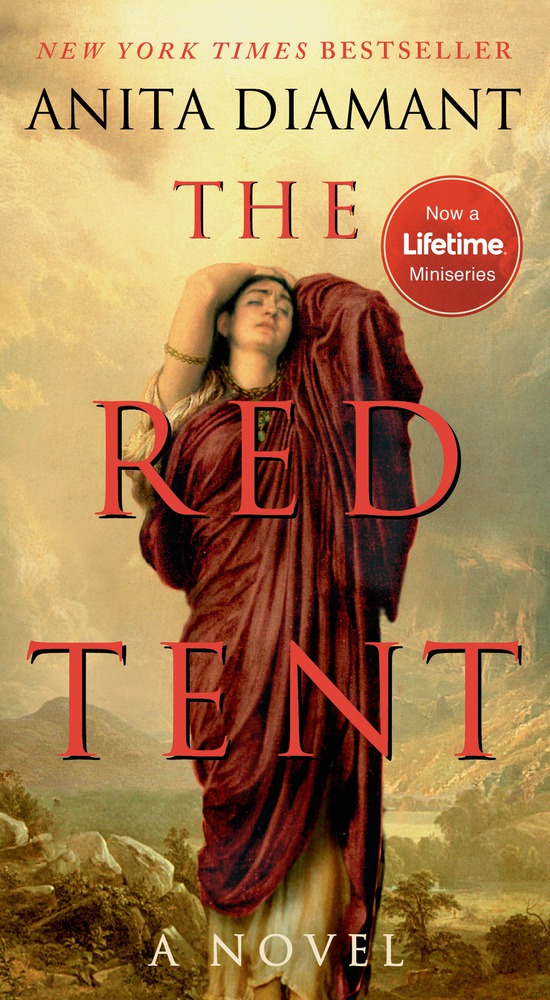
One of my all-time favourite books is The Red Tent by Anita Diamant. This tells the story of Dinah who makes a (very) brief apppearance in The Bible in the book of Genesis as the daughter of Jacob ( the man famous for his 12 sons!). It is a fscinating account of the life of a woman in biblical times, in particular a strong woman trying to make her own way in the world. It is one of those books that completely transports you to another time and place and leaves you thinking about Dinah and her life long after closing the book.


Diary of an Ordianry Woman by Margaret Forster is an unforgettable story charting the life of Millicent King, an ordinary woman, born in 1901 whose life spans the 20th century. The novel is presented as an edited diary and this gives a sense of intimacy and allows us to feel that we really know Millicent. The 20th century was a time of incredible social change, particularly for women and this book shows, in brilliant detail, what it was like to be a woman at this time.


Women Who Blow on Knots by Ece Temelkuran was originally published in Turkey. It charts the journey of four  Muslim women from different backgrounds who embark on a journey together from Tunisia to Lebanon during the revolutions of the Arab Spring. It explores the social questions of politics, religion and women in The Middle East, whilst also being a page turning mystery (why has the septuagenarian Madam Lilla brought these women together for this journey?) and an examination of the universal bonds of sisterhood. An unusual book that is definitely worth a read.


What books would you add to this list?

Friday, 23 November 2018

A selection of recommended John Boyne books

I have just finished reading The Heart's Invisible Furies, by John Boyne. John Boyne is a fairly prolific Irish writer (he has written eleven novels, five children's books and one collection of short stories) and this is the third of his novels that I have read, but I don't think of him as a particularly famous author - he does not seem to be a household name. Each time when I finished his book I was left profoundly moved, and unable to stop thinking about the protagonists, so I thought it was time to spread the word about Boyne's fantastic and very moving writing and encourage more people to read his work. He writes on a very wide range of topics, some but by no means all are set in his native Ireland and examine Irish social history, in particular the relationship of the Irish state with the Catholic Chrurch, and some are about real historical events. Here are the 3 that I have read and would recommend (although several other Boyne novels are on my 'to be read' list).

The Heart's Invisible Furies is an epic novel covering the first 70 years in the life of the protagonist Cyril Avery. Cyril is born in Dublin in  the 1940s and given up for adoption by his unmarried mother. Cyril is gay, and the novel explores his search for happiness and acceptance (self acceptance and acceptance by others) in a society that did not tolerate homosexuality. The writing is beautiful and whilst the novel is very sad Boyne tempers this with moments of humour in a very effective way. The characterisation is fantastic and Cyril quickly begins to feel like a friend to the reader. This is one of those novels where you feel bereft when you come to the end. The book also provides an interesting social commentary on attitudes to homosexuality over the last 70 years both in Ireland and the wider world and made me feel desperately sad for the prejudice and hostility that people had to contend with whilst searching for happiness. The novel does end with a sense of hope and peace as Cyril reflects on how far things have moved on in his lifetime, but I can't help feeling overwhelmingly sad at everything Cyril and his contemporaries went through. I really enjoyed the novel and it reminded me in many ways of A Little Life by Hanya Yanagihara, which I would also recommend.


The Absolutist is a First World War novel with a different perspective. It is told through the eyes of Tristan Sadler and the narrative takes place in two time frames. One happens during the war, describing Tristan's friendship with Will Bancroft whom he meets at training camp and fights alongside at the front line. Will becomes a conscientious objector during the war, in fact an 'absolutist' who refuses to have anything to do with war effort at all, bringing shame on his family, and the second part of the narrative describes Tristan's journey to meet with Will's family after the war as there are things he needs to tell them. 

I have read a lot of First World War fiction and this is totally different, something completely new. It has themes of identity, morality (particularly what happens when personal morality clashes with perceived cultural and national morality), bravery, regret and unrequited love. It is powerful, moving and highly recommended.

A History of Loneliness is another powerful and deeply sad book. It tells the story of an Irish Catholic priest, Odran Yeats, from when he enters the seminary in the early 1970s, over forty years until the point when child abuse scandals have rocked the Catholic church in Ireland (and elsewhere) to breaking point. These revelations, and what Odran himself has lived through and witnessed (including friends and colleagues standing trial and being jailed, and his own family members' lives destroyed) challenge Odran's own faith and leave him tormented by guilt as he examines his own complicity in what happened. I found it incredibly sad as I believed that fundamentally Odran was a good man who wanted to see the best in others but ultimately this was not enough and his life, faith and belief system was shaken by his own inaction.  The book also examines the impact of abuse by trusted and respected members of the community has on the lives of the victims and their families with devastating honesty and provides empassioned social commentary on Ireland and it's relationship with the Catholic Chruch. Sad on so many levels, but powerful, timely and in my opinion a must-read.

It is also worth noting that John Boyne also writes novels for younger readers. The Boy in the Striped Pyjamas is perhaps his most famous book - a novel for children describing the friendship through the fence between 2 children, one a Jewish boy interred in a concentration camp and the other the son of them camp overseer. My eleven year old daughter has just finished reading Boyne's Stay Where You Are And Then Leave ,which she really enjoyed. It examines shell shock and mental illness in soldiers of the First World War, through the eyes of a young boy whose father is suffering from shell shock in 1918. She said it was very thought provoking, and definitely promoted discussion between us.

John Boyne is a versatile and talented writer, who in my experience creates compelling narratives and engaging characters. I am looking forward to reading more of his work. If you have your own favourites amongst the novels of John Boyne, please tell me about them.