Tuesday, 16 October 2018

The Man Booker Prize shortlist 2018

The 2018 Man Booker prize winner has been announced this evening as Milkman by Anna Burns. This year I have managed to read 4 out of the 6 shortlisted novels, including the winner. Here is my take on those novels.

Milkman by Anna Burns

Although the city is never named in the book, this novel is set in 1970s Belfast and tells a heartbreaking story of a city fractured by sectarian violence. The main character, known only as 'middle sister', is never named and neither are any of the other characters, but this does not stop us getting to know them and empathise with them. Middle Sister longs to remain unnoticed (by both the state and the paramilitaries who control her neighbourhood) and develops many strategies to achieve this aim, so she is upset to learn that she has unwittingly drawn the attention of a local paramilitary bigwig and thereby become the object of much unwanted gossip. As a result her life and relationships are turned upside down with some very disturbing consequences. 
This novel reads almost like a thriller - the tension is constantly ratcheting up in the background, and although this tension does not actually build to any one single cataclysmic event, plenty of horrific things happen along the way. It also forces you to think about love and loss and what the fear of loss can do to a person. Burns builds a frighteningly realistic picture of life in a civil war, and how ordinary things in extraordinary circumstances first adapt and then just become ordinary themselves. 
I wanted to love this novel, but I didn't. The unusual narrative style made it difficult to get into for me (it took me a very long time to read) and the way the narrative jumps across time frames was at times confusing, but this didn't stop it from being a powerful, eye-opening and ultimately worthwhile read. I think the distinctive and unusual style is what helped to make it a Booker Winner.

The Overstory, by Richard Powers
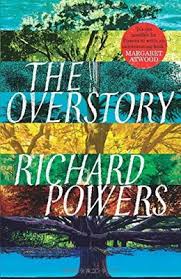
This is an unusual, powerful and affecting novel.Trees of all kinds, but especially those native to North America are the real stars of this book and they are the glue that holds a complex web of characters and stories together to forma novel. There are 9 main characters who start out as strangers, and gradually over a period of 50 years or so their lives become intertwined with trees (each for a different reason) and then with each other.  It is a long book but there is strong narrative drive throughout and I found it very difficult to put down. It is fascinating, traumatic and depressing in equal measure as it forces you to reflect on the impact of humans on the planet and what that may mean for future generations. It is beautifully written and highly recommended. This is the novel I would have chosen to win.

Washington Black, by Esi Edugyan

This is a novel of great scope. It begins on a sugar plantation in Barbados in 1830 where we meet the eponymous Washington Black, a young slave, who then escapes from the plantation with the owner's brother Titch. They travel first to America, then the frozen north of Canada where Titch disappears and Washington Black is left to fend for himself in this alien world. There follows Washington's search to find his place in the world and also for Titch who he cannot stop thinking about, which takes us (through incredibly vivid descriptions and beautiful writing) to Nova Scotia, London, Amsterdam and Morocco.
I started out absolutely loving this book, but that feeling started to wane. I think that there was simply too much going on and too much story trying to be told and when I reached the end I was left feeling a little flat. It is beautifully written and the science explored along the way (from early aviation to the first aquarium) is fascinating. The descriptions of the brutality faced by Washington Black both before and after his escape are haunting and cause us to reflect on this terrible notion that slaves were no more than livestock. There is a lot to think about in this book, and the over-riding theme is of Washington Black struggling to live a fully human life in a prejudiced world. Some food for thought and some beautiful writing in a book undeniably worth reading, but not a Booker Prize winner, in my opinion.

Everything Under by Daisy Johnson

This is another powerful, original and affecting novel. The writing is lyrical and descriptive and the narrative utterly compelling as we follow Gretel in her search for her estranged mother and examines her unconventional childhood and their difficult relationships. Emotive themes of suicide, abandonment, dementia, fluid gender identity, and ambiguous sexuality are explored sensitively,and though the novel is ultimately quite dark (inevitable in a modern retelling of a Greek tragedy) it is a thing of beauty that will stay on your mind for a long time after finishing.


Friday, 24 August 2018

8 Crime Fiction series that will make you fall in love with crime fiction

I am currently reading Snap by Belinda Bauer, which has been longlisted for the Man Booker Prize 2018. It wouldn't be controversial to say that it is unusual for a crime fiction novel to be included on this prestigious list, but it did get me thinking about how crime fiction is often derided as trashy with formulaic plots, one dimensional characters and poor writing. I am sure there is some crime fiction out there that conforms to these stereotypes, but there is so much out there that is just fantastic. I LOVE crime fiction, and here is a selection of my favourite writers and detectives: the series' that have me queuing up at the bookshop when a new one is published. Whether you are already a lover of crime fiction, or someone who has always thought crime fiction is not for you, give these a whirl - you won't be disappointed.


Shetland series, by Ann Cleeves


Ann Cleeves creates unusual, believable characters who do not conform to normal detective stereotypes, but she also creates an amazing sense of place in her novels, and this is what, for me, makes them stand out from the crowd of other crime fiction. When reading these novels I was so completely transported to the Shetland Isles that they have rocketed to the top of my 'places I would like to visit' list. The ladscape and climate she describes often have a vital part to play in the crimes being investigated by her detective Jimmy Perez too. There are 8 novels in the series, Raven Black, White Nights, Red Bones, Blue Lightning, Dead Water, Thin Air, Cold Earth, and Wild Fire.


Adam Dalgliesh series, by PD James


There are 14 books in this series. The first was published in 1962 and the last in 2008, so some of them can feel quite dated (especially as Inspector Dalgliesh has not really aged significantly during the series) but they are still examples of fine writing and very clever, subtle plots. Adam Dalgliesh is a cerebral and private man, but a likeable one whose integrity shines through.


Rebus series, by Ian Rankin


There are currently 21 books in this series. John Rebus and his sergeant Siobhan Clarke are 2 of my favourite characters in literature and their working relationship and ongoing friendship is something I always look forward to revisiting. The dynamic between the 2 characters is one of the things that makes this series so enjoyable (although Clarke does not appear in the first few and these are no less enjoyable). Rebus is to some extent a stereotypical crime fiction detective: a loner with a troubled past who drinks and smokes too much and is not afraid to bend the rules; but he is much more than that and his character is so well developed over the series that he begins to feel like an old friend. Add in to the mix the clever, yet believable plots, the social commentary and the subtle way Rankin has of juxtaposing the Edinburgh presented for tourists with the 'real' Edinburgh Rebus deals with, and you have some truly great fiction.


Vera series, by Ann Cleeves


Another gem by Ann Cleeves, there are also 8 novels in this series: The Crow Trap, Telling Tales, Hidden Depths, Silent Voices, The Glass Room, Harbour Street, The Moth Catcher and The Seagull. Vera is a dishevelled middle aged female detective with few social graces, but likeable to the reader nonetheless. These novels are set in the wilds of Northumberland and as with the Shetland series the sense of place is well conveyed and important.


Dublin Murder Squad series by Tana French


These novels, In the Woods, The Likeness, Faithful Place, Broken Harbour, The Secret Place and The Trespasser, differ slightly from conventional crime series' because there is no single detective as the main character in the series. Instead each novel has a different lead detective, who was a small part of the investigation in the previous book. This clever strategy keeps the novels fresh and stops them becoming formulaic as each of the lead characters is very different to the last. Fast paced, with plenty of plot twists, these are long novels but they fly by.


Shardlake series by CJ Sansom


Another series of crime novels with a difference, this series (Dissolution, Dark Fire, Sovereign, Revelation, Heartstone, Lamentation and the soon to be published Tombland) has as its central character a lawyer from Tudor London, Matthew Shardlake. CJ Sansom's historical writing is second to none and the reader is completely transported to Tudor times, warts and all, and learns a lot about the history of the period (including the dissolution of the monasteries and the fate of Henry VIII's various wives) along the way. They are gripping reads and Shardlake is a very human, likeable and believable character despite the 500 year time gap. Heartily recommended, these novels transcend the genre of crime fiction to be just great fiction.


Wallander series, by Henning Mankell


These novels are set in Sweden and originally written in Swedish. Kurt Wallander is a somewhat stereotypical middle aged police detective with an unhealthy lifestyle and a history of failed relationships, but he is very likeable and as the series progresses the reader comes to know him well. The novels are perhaps a little grittier than the other series' mentioned here and deal with some pretty bleak themes, but they are well worth a read - fast paced and gripping with plenty of plot twists.


Harry Hole series by Jo Nesbo


Another Scandinavian series, origianlly written in Norwegian  and mostly set in Norway, although Hole's investigations also take him to Africa and Australia, these are also more graphic and gritty than the other series' I have recommended. Hole is another troubled detective with an addictive personality who is not always likeable, but those who like their crime fiction with more than a hint of thriller, with some really dark crimes and fast paced twists and turns of plot these novels will certainly hit the mark.

What are your favourite crime fiction series?

Wednesday, 25 July 2018

Book Review: Home Fire, by Kamila Shamsie


Home Fire, by Kamila Shamsie was announced as the winner of the Women's Prize for Fiction 2018 back in June so I have been eagerly anticipating reading it. It is a modern retelling of  Sophocles's Antigone, but is also a compelling and thrilling story of  contemporary Britain.

Isma Pasha is a young British Muslim who has been responsible for raising her teenage twin siblings Aneeka and Parvais, since the death of their parents. As the novel begins Isma is finally able to realise her dream of studying in America,. Whilst there she meets and befriends Eamonn, the son of a British Pakistani father and an Irish American mother, who soon becomes involved with the whole Pasha family. Matters are complicated by the fact that their father was a jihadi who was captured in Afghanistan and killed while en route to Guantanamo Bay, and Eamonn's father is the British Home Secretary, Karamat Lone. Cue a complicated story of conflicting loyalties and clashing cultures - a real Greek Tragedy.

The story with its themes of love, loyalty and clashes of both family and faith (Ancient Greek themes that are very relevant  today) is revealed from 5 different viewpoints  (Isma, Aneeka, Parvais, Eamonn and Karamat) and builds to a brutal and devastating climax that left me reeling.  I don't want to give away too much of the plot but need to tell you that it is an insightful exploration of the dilemma faced by Muslims in Britain today that draws you in and leaves you a little changed for reading it. It is a Greek Tragedy, so you shouldn't be expecting a happy ending but if you like a book to be a slightly uncomfortable read that will really make you think, then you should read this. 


Tuesday, 24 July 2018

8 of the Best Booker Prize Winners

The longlist for the Man Booker Prize 2018 was announced today and The English Patient, by Michael Ondaatje was recently announced as the winner of the Golden Booker, readers' favourite Booker prize winner. This got me thinking about my own favourites amongst the previous winners of this prestigious prize and I came up with my own list of the best of the Booker Prize winners (I have read The English Patient, but it doesn't make my list!).

Paddy Clarke Ha Ha Ha by Roddy Doyle

The 1993 winner is told through the eyes of Paddy Clarke, a 10 year old boy in 1960s Dublin. It is a fantastic recreation of childhood and the voice of Paddy Clarke is beautifully created. Consecutive paragraphs skip from one topic to the next totally unrelated topic as Doyle captures perfectly the speech patterns of children, together with the boundless curiosity and never ending questions.His innocence / naivety provide poignancy as we realise we (and he) are witnessing the unravelling of his parents' marriage. Desperately sad and laugh out loud funny, it also provides social commentary on working class Dublin at this time - a must-read book.

The God of Small Things by Arundhati Roy

Arundhati Roy's debut novel won the Booker prize in 1997 to huge critical acclaim. It is a much loved and often talked about book. The prose is hauntingly beautiful and a real celebration of the English language. the book follows twins Rahel and Estha, growing up in Kerala. Their beautiful and much-loved cousin Sophie Mol comes to stay and dies tragically. We find out that she dies on page 3 but don't find out how or why until the last chapter. However, the ramifications of her death echo throughout the book and affect every character. 

Life of Pi by Yann Martel

This extraordinary book won the Booker Prize in 2002. It tells the story of a boy and a tiger marooned together on a life boat and will make you question everything you thought you knew. Probably the most thought-provoking book I have ever read. 

The Inheritance of Loss by Kiran Desai

This novel won the Booker prize in 2006. The story is told through 3 main characters: 16 year old Sai, who lives with her grandfather the judge, in a dilapidated hill station in the foothills of the Himalayas in northern India, and Biju, the son of the judge's cook, struggling to find a better life in New York. This is a searing examination of class and identity, and is a beautifully written and compelling story.

The Luminaries by Eleanor Catton

The 2013 winner is a huge novel in both length and scope. It is set in New Zealand during the gold rush of the 1860s. A very clever plot structure opens with a man stumbling upon a secret meeting of twelve men all gathered together to tell their stories. It turns out that all these stories are linked (often through many intricate layers) and a compelling mystery is gradually revealed. It is a page turner - you really want to get to the bottom of this mystery (even the nature of the mystery is not immediately apparent - is it a murder, disappearance, fraud?) and the way it is revealed is original and intelligent. The structure of the novel is important, but does not overpower it. The writing is eloquent and highly evocative of time and place. A real triumph!

True History of The Kelly Gang, by Peter Carey

This won the Booker prize in 2001 and it's easy to see why. It is a novel unlike anything else, where Carey completely transports the reader to the 19th Century and the life of the notorious bush ranger, Ned Kelly. Carey has written in the voice of Kelly, uneducated and barely literate and this is what helps to totally immerse the reader in the time and place, but also means that it can be hard to get into. A page turning adventure and a mind-blowing accomplishment from this talented author.

Wolf Hall and Bring up the Bodies by by Hilary Mantel


Hilary Mantel is only the third author (and the first British author, and first woman) to win the Booker prize twice: first for Wolf Hall in 2009 and then for its sequel Bring up The Bodies in 2012. Both books centre on Thomas Cromwell: the first covering his rise, from the humble beginnings of a blacksmith's son, to becoming one of the most powerful men in England, as adviser to the King; and the second centring on the downfall of Anne Boleyn and Cromwell's part in it. The historical detail and the beautiful descriptive writing mean that Tudor London really does come alive. The novel is written almost as Cromwell's stream of consciousness and that, coupled with the authentic language and turns of phrase from the sixteenth century, can make it difficult to get into, but persevere because it is worth it. This kind of total immersion in another time and place is what I crave when reading and Mantel achieves it. I really felt like I was living in Tudor London. A fascinating insight into a turbulent period in history and a look at power and the desires, dilemmas and corruptions associated with it. I found Bring up The Bodies to be faster paced and the more absorbing read, but  Wolf Hall is still a very rewarding read, and you can't really separate the two - they need to be read together.

What is your favourite Booker prize winning novel? What would you add to this list?

Monday, 16 July 2018

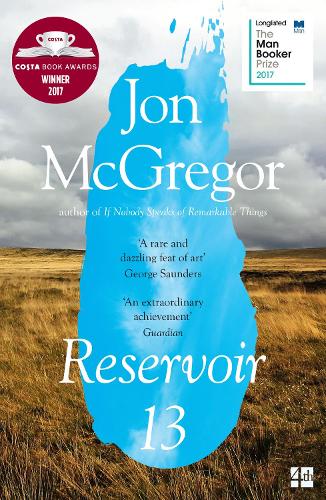
Book Review: Reservoir 13 by Jon McGregor


Reservoir 13 won the Costa Novel Award in 2017, but has very mixed reviews from readers on Amazon. So I knew before I started this would be be an unusual novel and not to everyone's taste, but I was completely blown away by it.

In the early years of the 21st century a 13 year old girl goes missing whilst on holiday in a Peak District village. The book follows the life of the village and villagers over the next 13 years. Each chapter covers 1 year of village life. There's no denying that the narrative style is unusual: there are no paragraphs and no "main characters". Instead the omniscient narrator seems somewhat removed from what is happening as he narrates on the annual cycles of the plants, animals and humans in the village, almost as if for a documentary, and therefore the reader feels somewhat removed from the characters. No character is given any more importance in terms of storyline or word count than any of the others. The prose is sparse and the details gleaned about each character are few and far between but over time the reader does feel close to each character and begins to feel that they know them intimately. Indeed the reader becomes totally immersed in the rhythms and life of this small, un-named rural community. At the same time the natural world and its seasonal rhythms are described with poetic beauty, often reminding me of the novels of Melissa Harrison (http://thisreadingmummy.blogspot.com/2018/03/book-review-clay-by-melissa-harrison.html).

There are no extraneous words in this novel. It is remarkable how McGregor manages to say so much and create such beautiful pictures and so much empathy for characters with so few words. The magic comes in the ordering of the sentences. A sentence or 2 about one character (always providing a snippet of important information about their life - sometimes heart breaking, sometimes brutal, sometimes funny) before moving on to the next character or village event, interspersed with fascinating details about the natural world.

I found this to be a beautiful and very affecting novel. I could not stop thinking about the characters. A real triumph of descriptive writing, celebrating the power of words to convey both pictures and emotions. I would wholeheartedly recommend it.


Tuesday, 3 July 2018

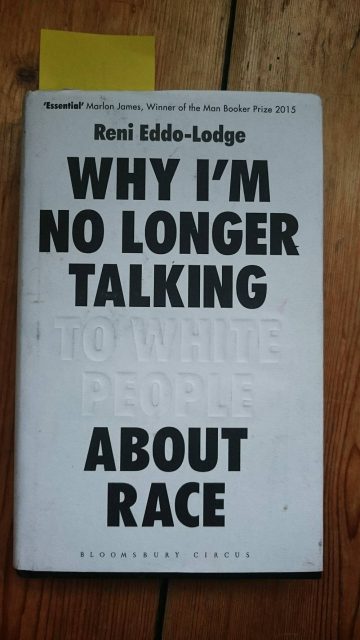
Book Review: Why I'm No Longer Talking to White People About Race, by Renni Eddo-Lodge


This was a challenging book to read and a difficult subject to write about,  but it is a book that everyone should read and a book that everyone should talk about. That's kind of the point of the book.

This book seeks to equip white British people with knowledge about the history of being black in Britain, including Britain's often forgotten involvement in the slave trade, and then shows how this has lead to a modern society that is structurally racist. The concept of white privilege is explained and the reader is shown how white privilege does apply to them, not just white people in the USA.  The book finishes by explaining what to do about it, how to challenge it and how to slowly begin to change the world.

As a white person, living in the UK, this was an incredibly uncomfortable, but thought provoking read. Time and again I was called on to examine my own conscience and review my own prejudices before trying to arrive at a whole new way of thinking. It left me feeling embarrassed by my own ignorance and lack of empathy, but also fired up. This is an important book.

The book is concise, accessible and incredibly well explained. Eddo-Lodge explains why she needed to write the book - the flat out denial she would run into from white people when she began to talk about racism in the UK and I found that on reflection, what she was talking about was indeed my own reaction. As soon as I realised this I knew I needed to read on. I am exactly the kind of person this book was written for, and the chances are that you are too.

The first thing that really resonated with me were her thoughts on British black history:

While the black British story is starved of oxygen, the US struggle against racism is globalised into the struggle against racism that we should look to for inspiration - eclipsing the black British story so much that we convince ourselves that Britain has never had a problem with race.


I first read about, and attempted to understand, white privilege in the novel Small Great Things, by Jodi Piccoult (http://thisreadingmummy.blogspot.com/2017/03/book-review-small-great-things-by-jodi.html ) and was guilty of exactly that sentiment! Piccoult does a great job of explaining white privilege, but I was blinded to it in the way described by Eddo-Lodge, thinking that racism and white privilege is only relevant in the USA.


Structural racism is another concept that is difficult to understand (and difficult to swallow for many white British people) but is explained in a razor-sharp way by Eddo-Lodge:

Structural racism is dozens, or hundreds, or thousands of people with the same biases joining together to make up one organisation, and acting accordingly. Structural racism is an impenetrably white workplace culture set by those people, where anyone who falls outside of the culture must conform or face failure. Structural is often the only way to capture what goes unnoticed - the silently raised eyebrows, the implicit biases, snap judgements made on perceptions of competency.

Eddo-Lodge challenges the oft-cited defence of well-meaning white people that they are not racist, they don't even see race and they are raising their children to be colour blind. 

Not seeing race does little to deconstruct racist structures or materially improve the conditions which people of colour are subject to daily. In order to dismantle unjust, racist structures, we must see race. We must see who benefits from their race, who is disproportionately impacted by negative stereotypes about their race, and to who power and privilege is bestowed upon - earned or not - because of their race, their class and their gender. Seeing race is essential to changing the system. 

Eddo-Lodge challenges without aggression, and causes the reader to reflect on their own ingrained biases on just about every page. There were many times when I had to pause, re-read and take stock. Please read this book.

As a post script, other works of fiction that were brought to mind when reading this book and which may provide other perspectives and background information on some of the issues include Small Great Things by Jodi Piccoult (as already mentioned); Americanah by Chimamanda Ngozi Adichie ,which talks about the experience of being black in the USA; and Homegoing by Yaa Gyasi (http://thisreadingmummy.blogspot.com/2017/01/book-review-homegoing-by-yaa-gyasi.html which attempts to explain the long lasting and far reaching consequences of slavery. However, all 3 of those books are about the American experience. I struggled to think of any books dealing with racism, the legacy of slavery or white privilege set in modern Britain, with British characters (which kind of proves Eddo-Lodge's point about Brits thinking race is an American issue). Small Island, by Andrea Levy came to mind though as it describes the shocking racism faced by Caribbean Immigrants to London in the 1940s/50s and the struggles they faced trying to settle in a new and often hostile country.

As always, suggestions of other relevant reading (fiction or non-fiction) are always very welcome.

Friday, 22 June 2018

Book Review: Where the World Ends, by Geraldine McCaughrean


Where the World Ends, by Geraldine McCaughrean has just been awarded the 2018 Carnegie Medal. My eleven-year-old daughter and I have both read and enjoyed it, although my daughter found it very scary, and I can see why. I am not sure of McCaughrean's target audience with this book and it has been categorised as teenage fiction in our local library. Having read it, I think this is probably a wise move as some of the content is quite graphic when describing injuries sustained- it could be described as gruesome in places - and the categorisation as teenage fiction means younger readers cannot check the book out on their own card, so parents are alerted that content may be unsuitable for some younger readers.
That said, this is a fabulous book, capable of totally transporting the reader to another time and place. For readers of my daughter's age and young teenagers this is a time and place so completely alien to their own experiences that this in itself is remarkable and makes for a magical reading experience. The setting is the archipelago of St Kilda, the most remote habitable islands in Britain, in the 1720s. A group of 9 boys of varying ages and 3 men are sent from the island of Hirta to Warrior Stac (basically a large lump of rock 4 miles out to sea) in order to hunt sea birds for their feathers, oil and meat. This expedition takes place every year and most of the boys have done the trip before. They are usually collected 3-4 weeks later. This particular year, the boat does not return to collect them and summer becomes autumn, which in turn becomes winter, and the weather worsens and the food begins to run out as they are marooned indefinitely on the Stac.
By turns terrifying, heartwarming, heartbreaking and even  humorous, we learn of the ways the boys cope and learn to survive in their extraordinary situation and we also learn a little of what everyday life would have been like on this remote archipelago 300 years ago. Fascinating, and a real page turner - a compelling adventure story and a study of group dynamics under stress.
This is fiction based on events that actually happened, and I think this is what made it even more frightening for my daughter, but it also makes for very poignant reflection on the hardships of life 300 years ago.
This is a deserved winner of a prize that aims to celebrate "outstanding books written in English for children and young people" as it has the power to offer total escapism whilst encouraging empathy with a people and way of life previously unimagined, as well as providing enjoyment, learning and the chance to reflect on your own behaviour in group situations. Powerful stuff, beautifully written.