Showing posts with label Book reviews. Show all posts

Friday, 17 September 2021

Book Review: Piranesi, by Susanna Clarke


 Piranesi, by Susanna Clarke has just been awarded the Women's Prize for fiction, 2021. This was my primary motivation for deciding to read it, having been somewhat put off by seeing that it had been described as a fantasy or science fiction novel. Indeed, when the copy I had reserved arrived from my local library it had a large 'science fiction' sticker on the spine. Wikipedia defines science fiction as a genre of speculative fiction that typically deals with imaginative and futuristic concepts such as advanced science and technology, space exploration, time travel, parallel universes and extraterrestrial life.

Piranesi definitely fits this definition as it takes place in a parallel universe but it certainly shows that sci fi writing can also be literary fiction. 

The book follows Piranesi, who lives alone in an endless series of halls full of statues, visited twice a week by a mysterious figure he refers to as 'The Other', convinced that they are the only two living humans in the world. Piranesi spends his time mapping the halls, cataloguing the statues and writing in his journal, subsisting by fishing from the flooded halls below. Gradually Piranesi begins to notice signs of another human presence - wafts of perfume and written messages left behind - and the novel develops into an intriguing mystery. Who are these people? (Even Piranesi is not sure who he is: Piranesi. It is what he calls me. Which is strange because as far as I remember it is not my name.) What is their relationship to each other?  What are The Halls? 

This genre-defying book is so different to what I normally read but I loved it. It is a fascinating study in solitude, a page turning mystery and a truly immersive experience. The strange characters and setting which begin as something so alien to the reader quickly become somewhere for the reader to retreat to from the outside world thanks to Clarke's superbly evocative writing. Highly recommended. 

Wednesday, 25 March 2020

Book Review: Africa, Amazing Africa, by Atinuke

Anyone who has visited my blog before will know I am a big fan of books about Africa. And I am a really big fan of books for children about Africa. And I am an even bigger fan of books about Africa that help to dispel the media and education- perpetuated misconception that Africa is a simply a place full of mud huts and poverty in desperate need of Western aid. This beautiful children's book ticks all those boxes, and some! I can't recommend it enough.
It is a book for young children (5-8 years) and has a simple format - 1 page of information about every country on the African continent. The Nigerian born author has found a unique interesting fact about each country and writes a short paragraph for each one, showcasing the diversity of the continent. While she does talk about poverty she also makes sure to point out that much of Africa is modern, dynamic, urban and forward thinking.
The illustrations by Mouni Feddag are gorgeous and there are fantastic maps to refer to as you read. My daughters aged 4 and 7 love this book. We read about one country each night at bedtime, and they have enjoyed searching for the countries on the map. Both girls have also taken this book into school, eager to share with the class the information about the country where they used to live.
This is a really great book -beautiful to look at and very informative.

Sunday, 15 March 2020

Book Review: The Mercies by Kiran Millwood Hargrave

The Mercies is Kiran Millwood Hargrave's first novel written for adults, after several successful YA and children's novels.
The Mercies is set in northern Norway in the seventeenth century, beginning with a terrifying storm (a real event that occurred on 24th December 1617) that kills very nearly the entire male population of the island of Vardo. The women left behind must fend for themselves in the harsh landscape north of the arctic circle. Eighteen months later a new commissioner arrives, summoned from Scotland to impose civilisation and order in this remote place. He brings with him his new wife, Ursa, a cossetted city girl from Bergen, who quickly befriends local girl, Maren.
The developing friendship between Maren and Ursa is one focal point of the novel and the reader comes to care deeply for the fate of these 2 young women, a fate which is bound together ever tighter as the novel progresses. At the same time, the real purpose of the commissioner's posting becomes clearer - to enforce sorcery laws brought in by the King to unify Norway in the Lutheran Church - and a literal witch hunt ensues. 
This book is by turns tender and terrifying. The setting is hauntingly evoked - I am always amazed at the power of books to transport readers to  a time and place so completely alien to their own experience and this book does that wonderfully - and the characters are incredibly real. It is atmospheric and builds to a dramatic and brutal conclusion. I flew through the final third of the book  desperate to know the outcome. It is made all the more chilling knowing that the novel is based on real events. There were witch trials throughout the Finnmark region in 1621 that resulted in the deaths of 91 people. I love fiction that builds on real events and this affecting novel left me thinking about the fate of the real people at the heart of it and inspired me to find out more about the history of witch trials in the seventeenth century.
Read this book and be thankful that your daughters are free to be strong independent women without fear of persecution. 

Saturday, 1 June 2019

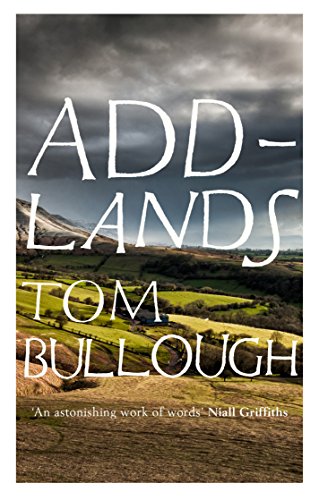
Book Review: Addlands, by Tom Bullough

This was not a book I had heard of before I stumbled across it in a local bookshop. It was truly a serendipitous find.  I bought it because it was a book about the local area (well, somewhere about 15-20 miles from where I live) by a local author,  and I'm very glad I did. It is a totally absorbing read, lyrically beautiful and with the power to totally immerse the reader in the life of the isolated valley in mid-Wales where it is set.

It is huge in scope (but not in length, being a very manageable 293 pages long) following the fortunes of the Hamer family over 70 years and 4 generations as they scratch out a living from their hill farm. The characters are brilliantly brought to life and the changing seasons of the farm and the hillside on which it nestles lyrically described. The language is often poetic as it seeks to show how the place where these characters live is just as much a part of them as any other character trait.

Etty is a young woman, already pregnant when she marries Idris Hamer and comes to live on the remote Funnon Farm, on Llanbedr Hill near Builth Wells. She is the rock around which the novel revolves, the anchor to which all the other characters are moored, and the reader quickly grows to love her. Her son, Olly is a different matter altogether, wilder and more unpredictable yet also completely rooted to the farm and his mother.  Olly was born in 1941 and we follow his life from then until 2011 -  over a period of monumental change and modernisation for this part of mid-Wales. We see the closing of the local railway, the gradual moving away from the hold of the methodist church on the local population, the arrival of electrictiy, the move from horse power to tractors and the life-changing foot and mouth outbreak of 2001. All these upheavals and the personal triumphs and tragedies of the characters are contrasted with the quiet natural rhythms of the landscape which remain the same year on year.

It is a beautiful and affecting book, which will make you laugh and cry. The local dialect is cleverly employed, helping with the total immersion of the reader in this landscape and bringing the characters vividly to life. It is a haunting examination of continuity and change: how the landscape we live in makes us who we are and how the last century has changed us all.

When you have finished reading if you are anything like me you will yearn for the hills of Radnorshire and will be thinking about the characters and what the future holds for them for a long time to come. Highly recommended.


Wednesday, 25 July 2018

Book Review: Home Fire, by Kamila Shamsie


Home Fire, by Kamila Shamsie was announced as the winner of the Women's Prize for Fiction 2018 back in June so I have been eagerly anticipating reading it. It is a modern retelling of  Sophocles's Antigone, but is also a compelling and thrilling story of  contemporary Britain.

Isma Pasha is a young British Muslim who has been responsible for raising her teenage twin siblings Aneeka and Parvais, since the death of their parents. As the novel begins Isma is finally able to realise her dream of studying in America,. Whilst there she meets and befriends Eamonn, the son of a British Pakistani father and an Irish American mother, who soon becomes involved with the whole Pasha family. Matters are complicated by the fact that their father was a jihadi who was captured in Afghanistan and killed while en route to Guantanamo Bay, and Eamonn's father is the British Home Secretary, Karamat Lone. Cue a complicated story of conflicting loyalties and clashing cultures - a real Greek Tragedy.

The story with its themes of love, loyalty and clashes of both family and faith (Ancient Greek themes that are very relevant  today) is revealed from 5 different viewpoints  (Isma, Aneeka, Parvais, Eamonn and Karamat) and builds to a brutal and devastating climax that left me reeling.  I don't want to give away too much of the plot but need to tell you that it is an insightful exploration of the dilemma faced by Muslims in Britain today that draws you in and leaves you a little changed for reading it. It is a Greek Tragedy, so you shouldn't be expecting a happy ending but if you like a book to be a slightly uncomfortable read that will really make you think, then you should read this. 


Monday, 16 July 2018

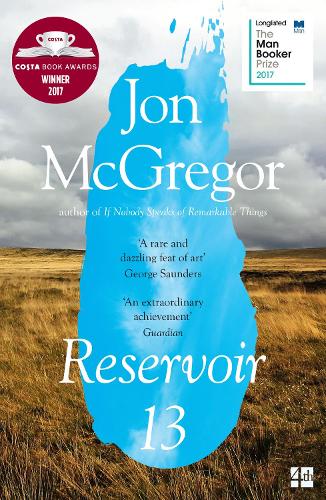
Book Review: Reservoir 13 by Jon McGregor


Reservoir 13 won the Costa Novel Award in 2017, but has very mixed reviews from readers on Amazon. So I knew before I started this would be be an unusual novel and not to everyone's taste, but I was completely blown away by it.

In the early years of the 21st century a 13 year old girl goes missing whilst on holiday in a Peak District village. The book follows the life of the village and villagers over the next 13 years. Each chapter covers 1 year of village life. There's no denying that the narrative style is unusual: there are no paragraphs and no "main characters". Instead the omniscient narrator seems somewhat removed from what is happening as he narrates on the annual cycles of the plants, animals and humans in the village, almost as if for a documentary, and therefore the reader feels somewhat removed from the characters. No character is given any more importance in terms of storyline or word count than any of the others. The prose is sparse and the details gleaned about each character are few and far between but over time the reader does feel close to each character and begins to feel that they know them intimately. Indeed the reader becomes totally immersed in the rhythms and life of this small, un-named rural community. At the same time the natural world and its seasonal rhythms are described with poetic beauty, often reminding me of the novels of Melissa Harrison (http://thisreadingmummy.blogspot.com/2018/03/book-review-clay-by-melissa-harrison.html).

There are no extraneous words in this novel. It is remarkable how McGregor manages to say so much and create such beautiful pictures and so much empathy for characters with so few words. The magic comes in the ordering of the sentences. A sentence or 2 about one character (always providing a snippet of important information about their life - sometimes heart breaking, sometimes brutal, sometimes funny) before moving on to the next character or village event, interspersed with fascinating details about the natural world.

I found this to be a beautiful and very affecting novel. I could not stop thinking about the characters. A real triumph of descriptive writing, celebrating the power of words to convey both pictures and emotions. I would wholeheartedly recommend it.


Tuesday, 3 July 2018

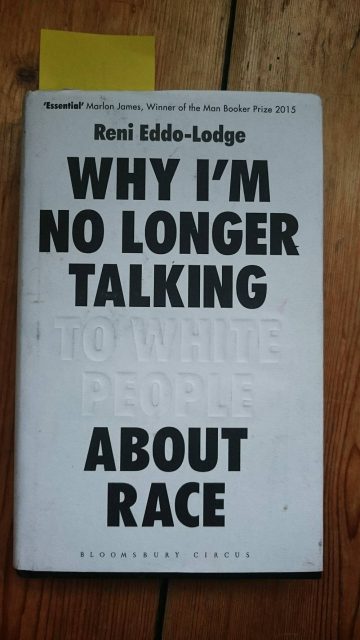
Book Review: Why I'm No Longer Talking to White People About Race, by Renni Eddo-Lodge


This was a challenging book to read and a difficult subject to write about,  but it is a book that everyone should read and a book that everyone should talk about. That's kind of the point of the book.

This book seeks to equip white British people with knowledge about the history of being black in Britain, including Britain's often forgotten involvement in the slave trade, and then shows how this has lead to a modern society that is structurally racist. The concept of white privilege is explained and the reader is shown how white privilege does apply to them, not just white people in the USA.  The book finishes by explaining what to do about it, how to challenge it and how to slowly begin to change the world.

As a white person, living in the UK, this was an incredibly uncomfortable, but thought provoking read. Time and again I was called on to examine my own conscience and review my own prejudices before trying to arrive at a whole new way of thinking. It left me feeling embarrassed by my own ignorance and lack of empathy, but also fired up. This is an important book.

The book is concise, accessible and incredibly well explained. Eddo-Lodge explains why she needed to write the book - the flat out denial she would run into from white people when she began to talk about racism in the UK and I found that on reflection, what she was talking about was indeed my own reaction. As soon as I realised this I knew I needed to read on. I am exactly the kind of person this book was written for, and the chances are that you are too.

The first thing that really resonated with me were her thoughts on British black history:

While the black British story is starved of oxygen, the US struggle against racism is globalised into the struggle against racism that we should look to for inspiration - eclipsing the black British story so much that we convince ourselves that Britain has never had a problem with race.


I first read about, and attempted to understand, white privilege in the novel Small Great Things, by Jodi Piccoult (http://thisreadingmummy.blogspot.com/2017/03/book-review-small-great-things-by-jodi.html ) and was guilty of exactly that sentiment! Piccoult does a great job of explaining white privilege, but I was blinded to it in the way described by Eddo-Lodge, thinking that racism and white privilege is only relevant in the USA.


Structural racism is another concept that is difficult to understand (and difficult to swallow for many white British people) but is explained in a razor-sharp way by Eddo-Lodge:

Structural racism is dozens, or hundreds, or thousands of people with the same biases joining together to make up one organisation, and acting accordingly. Structural racism is an impenetrably white workplace culture set by those people, where anyone who falls outside of the culture must conform or face failure. Structural is often the only way to capture what goes unnoticed - the silently raised eyebrows, the implicit biases, snap judgements made on perceptions of competency.

Eddo-Lodge challenges the oft-cited defence of well-meaning white people that they are not racist, they don't even see race and they are raising their children to be colour blind. 

Not seeing race does little to deconstruct racist structures or materially improve the conditions which people of colour are subject to daily. In order to dismantle unjust, racist structures, we must see race. We must see who benefits from their race, who is disproportionately impacted by negative stereotypes about their race, and to who power and privilege is bestowed upon - earned or not - because of their race, their class and their gender. Seeing race is essential to changing the system. 

Eddo-Lodge challenges without aggression, and causes the reader to reflect on their own ingrained biases on just about every page. There were many times when I had to pause, re-read and take stock. Please read this book.

As a post script, other works of fiction that were brought to mind when reading this book and which may provide other perspectives and background information on some of the issues include Small Great Things by Jodi Piccoult (as already mentioned); Americanah by Chimamanda Ngozi Adichie ,which talks about the experience of being black in the USA; and Homegoing by Yaa Gyasi (http://thisreadingmummy.blogspot.com/2017/01/book-review-homegoing-by-yaa-gyasi.html which attempts to explain the long lasting and far reaching consequences of slavery. However, all 3 of those books are about the American experience. I struggled to think of any books dealing with racism, the legacy of slavery or white privilege set in modern Britain, with British characters (which kind of proves Eddo-Lodge's point about Brits thinking race is an American issue). Small Island, by Andrea Levy came to mind though as it describes the shocking racism faced by Caribbean Immigrants to London in the 1940s/50s and the struggles they faced trying to settle in a new and often hostile country.

As always, suggestions of other relevant reading (fiction or non-fiction) are always very welcome.

Friday, 22 June 2018

Book Review: Where the World Ends, by Geraldine McCaughrean


Where the World Ends, by Geraldine McCaughrean has just been awarded the 2018 Carnegie Medal. My eleven-year-old daughter and I have both read and enjoyed it, although my daughter found it very scary, and I can see why. I am not sure of McCaughrean's target audience with this book and it has been categorised as teenage fiction in our local library. Having read it, I think this is probably a wise move as some of the content is quite graphic when describing injuries sustained- it could be described as gruesome in places - and the categorisation as teenage fiction means younger readers cannot check the book out on their own card, so parents are alerted that content may be unsuitable for some younger readers.
That said, this is a fabulous book, capable of totally transporting the reader to another time and place. For readers of my daughter's age and young teenagers this is a time and place so completely alien to their own experiences that this in itself is remarkable and makes for a magical reading experience. The setting is the archipelago of St Kilda, the most remote habitable islands in Britain, in the 1720s. A group of 9 boys of varying ages and 3 men are sent from the island of Hirta to Warrior Stac (basically a large lump of rock 4 miles out to sea) in order to hunt sea birds for their feathers, oil and meat. This expedition takes place every year and most of the boys have done the trip before. They are usually collected 3-4 weeks later. This particular year, the boat does not return to collect them and summer becomes autumn, which in turn becomes winter, and the weather worsens and the food begins to run out as they are marooned indefinitely on the Stac.
By turns terrifying, heartwarming, heartbreaking and even  humorous, we learn of the ways the boys cope and learn to survive in their extraordinary situation and we also learn a little of what everyday life would have been like on this remote archipelago 300 years ago. Fascinating, and a real page turner - a compelling adventure story and a study of group dynamics under stress.
This is fiction based on events that actually happened, and I think this is what made it even more frightening for my daughter, but it also makes for very poignant reflection on the hardships of life 300 years ago.
This is a deserved winner of a prize that aims to celebrate "outstanding books written in English for children and young people" as it has the power to offer total escapism whilst encouraging empathy with a people and way of life previously unimagined, as well as providing enjoyment, learning and the chance to reflect on your own behaviour in group situations. Powerful stuff, beautifully written.

Wednesday, 16 May 2018

Book Review: My Year of Meats, by Ruth Ozeki


My Year of Meats is the second Ruth Ozeki novel I have read ( the first being A Tale for the Time Being, which I loved and wrote about here :http://thisreadingmummy.blogspot.co.uk/2017/01/3-awesome-books-set-in-japan.html ) and I can't recommend it highly enough. The title is eye-catching and unusual and if you are looking for something different this novel does not disappoint. It has a narrative split between 2 women: Jane an American with a Japanese mother and American father, living in the USA and working for a Japanese TV company; and Akiko, the Japanese wife of an executive in the same Japanese TV company who lives in Japan.

Jane is a documentary film maker who lands a job making a TV series filming American families to promote American meat to families in Japan. The production company have a specific idea in mind of a wholesome American wife and family to be portrayed on each show but Jane wants to show her Japanese audience more of the real and diverse America. As the series progresses Jane makes some shocking discoveries about intensive meat production in the USA and becomes intent on exposing this.

Akiko is the unhappy wife of an executive within the production company, who is tasked by her husband with reviewing each episode and cooking the meat dish showcased within it. Her honest reviews cause further deterioration of her already unhappy marriage, but Akiko feels the families shown in the series resonate with her and she is driven to make contact with Jane. Eventually their 2 stories come together.

This book may seem primarily to be a shocking exposure of the flaws of factory farmed meat in the USA (nothing new to me reading in 2018 - still shocking, but not things I didn't know- but I imagine this was totally new to readers when it was published in 1998) but it is so much more than that. It explores the clash of cultures between America and Japan, particularly with regard to food, looks at domestic abuse (some scenes are very hard to read) and how this violence can be condoned and perpetuated by paternalistic societies idealising the submissive wife and is ultimately a shocking, compelling, moving and occasionally funny exploration of love, grief and the experience of growth and finding oneself. Masterfully written, with human and believable characters, this is a novel that stays with you.


Tuesday, 10 April 2018

Book Review: Everything I Never Told You, By Celeste Ng


I realise that I am a little late to the party on this one, as this is a book that everyone was talking about a few years ago, following its publication in 2015, but I have finally read it and I need to talk about it.

It is a while since I have been so moved by a book and so consumed by thoughts of what might have been.

This book opens with the line "Lydia is dead. But they don't know this yet." which is certainly an eye-catching opener. We follow Lydia's family as they report her missing and her body is discovered, and then through the heartbreaking months that follow as they try to understand what happened and come to terms with her death.

Lydia Lee is mixed race with a second generation Chinese father and an American mother. In small- town Ohio of the 1970s this is a big deal and the repercussions of this 'difference' cause problems for all 5 of the Lees. Each member of her family has their own demons to address: Lydia's mother is desperate for Lydia to be different, to confront stereotypes and stand out from the crowd; whilst her father is desperate for her to be liked and fit in as he has always felt like an outsider; her older brother wants to break free from his family; and her younger sister just wants to be loved for herself and not feel she is living in Lydia's shadow.

 The story flits back and forth in time between the present day following Lydia's death, the months leading up to her death, and all the way back to the early days of her her parents' relationship in order to provide insights into what happened to Lydia. This is never confusing and always works well, revealing information subtly to the reader. 

The subplot around their neighbour Jack never really works for me and the revelation concerning him near the end is unconvincing but this is a small point and does not detract from the overall experience. This is a tragic and thought provoking novel exploring themes of identity, growing up, fitting in and finding your place in the world. It also poignantly discusses the nature of love, regret and the sacrifices we make for love. It is an incredibly sad book, but I would wholeheartedly recommend it.

Monday, 26 March 2018

Book Review: Clay, by Melissa Harrison


Clay is quite simply a beautiful book. The writing is hauntingly lyrical and the descriptions of the changing seasons are incredible. Sometimes amazing, detailed descriptions can detract from the plot, but not in this case.

The story tells us about TC, an unhappy 10 year old boy finding solace in the few wild spaces of the city. He loves nature and eventually finds a kindred spirit in Jozef, a Polish immigrant yearning for the land he used to farm, who begins to look out for the boy and pass on his wisdom about the natural world. This unlikely friendship is observed by Sophia, an old lady who has lived most of her adult life on the edge of one of the city's few green spaces and has come to understand and cherish the natural rhythms of the seasons. She is also worried about TC and encourages her sheltered grand-daughter, Daisy to play with him, despite knowing that Daisy's mother would not approve. TC and Jozef discover and delight in a great deal of unlikely wildlife in the heart of the city and observe the microscopic details of their environment with joy and wonder.

As well as being a joyous and beautiful reminder of the importance of green spaces everywhere and the difference contact with nature can make to people's lives, this book examines themes of loneliness, class and urban decay with insight and poignancy. Just fantastic.

Friday, 9 February 2018

Book Review: Miss Smilla's Feeling for Snow, by Peter Hoeg

This is an unusual book - an unusual setting, an unusual character and an unusual plot - and that is what makes it a cracking read. I have heard it described as an early example of Nordic Noir but it is more than that.
It is the only book I have read set in Greenland and Hoeg manages to make the frozen wastelands being described come alive from the page - no mean feat when to most people the landscape is exactly the same for hundreds and hundreds of miles. And that is where Smilla, the protagonist, comes in - she knows snow and ice. She is a Greenlander, latterly exiled to Denmark and it is her knowledge of this vast and surprising landscape which brings it alive for the reader. Smilla is a fabulous character: tenacious, resourceful, philosophical and perhaps a touch lonely, and single minded to the point of obsession. Again, it is a strength of Hoeg's writing that can make the reader identify so completely with this strange yet likeable heroine. 
This is the only book I have read with an Inuit as the main character and the insights into the history and culture of the Inuit people of northern Greenland are fascinating.  
The son of Smilla's neighbour falls to his death one day from the roof of their apartment block in Copenhagen, and Smilla immediately smells a rat - her "feeling for snow" tells her that the footprints in the snow on the roof point to a different explanation to the verdict of accidental death offered by the coroner. She embarks on an investigation which leads her from Copenhagen to the frozen Arctic Ocean as a thrilling, twisting and deadly conspiracy is uncovered. 
This is a compelling read, and an intelligent thriller. The writing is brilliant - poetic and philosophical as Smilla ponders on her 37 years of life and struggles with her own identity. If you love thrillers but want to read something completely different to all the other thrillers out there then I can't recommend this highly enough.


Saturday, 5 August 2017

Book Review: The Power, by Naomi Alderman


Naomi Alderman's The Power was the winner of the 2017 Baileys Women's Prize for Fiction and it's easy to see why. This is a fantastic, subversive and thought provoking novel that will leave you questioning so many things in your everyday life and examining your own thoughts and ideals on just about every page. 

Imagine a world where everything is suddenly turned on its head and women hold all the power - literally. At an unspecified moment in time teenage girls around the world begin to discover that with a simple touch of the hand they can inflict agonising pain and even death through a jolt of electric current. There follows a worldwide revolution and society, religion and governments are utterly transformed. We follow the stories of 4 main characters: Roxy, the only daughter of a notorious London gangster; Allie, an American teenager in foster care; Tunde, an opportunistic Nigerian journalist; and Margot, an ambitious American politician, as the course of their lives is forever altered by this turn of events.

This really is fabulous satire. With her intelligent, engaging and subtly humorous writing Alderman illuminates with glaring and startling obviousness the extent of sexism in society today. By reversing the situation and showing men as "the weaker sex" she shows how ridiculous it is that women are routinely treated in this way. Although she touches on many serious and shocking practices in the world today such as female genital mutilation and sex trafficking, the subtle instances of casual sexism, as in the following observations, show with a brilliant irony how prevalent sexist attitudes are in all areas of life.

No one mentions that Olatunde Edo's videos have been such a hit because he's handsome as hell. He's half naked in some of them, reporting from the beach in just Speedos, and how's she supposed to take him seriously now, when she's seen his broad shoulders and narrow waist and the rolling landscape of obliques and deltas, glutes and pecs

There were many times when reading when I found myself with a wry smile reflecting on the truth of these subtle situations, so humorous when describing men in this way, yet so true in the media when you swap the gender roles portrayed. And particularly pertinent when many prominent women working in the British media are asking questions about why they are treated differently to their male colleagues. Does this scene describing the presenters on a local news / tv magazine show seem somehow familiar?

Matt laughs and says, I couldn't even have watched! He's very attractive, a good ten years younger than Kristen. The network had found him. Just trying something out. While we're at it, Kristen, why don't you wear your glasses onscreen now, it'll give you more gravitas. We're going to see how the numbers play out this way.

This is undoubtedly a feminist novel, and a very important social commentary, but it is also a very readable and razor sharp satire. It also touches on the nature of truth and propaganda and how easy it can be to rewrite history or at least to skew history towards a certain viewpoint. A really good novel and a worthy prize winner. Read it and hope that in the future your grandchildren will read it and wonder how it was possible that sexism could have been so prevalent in all societies in 2017. 

Wednesday, 24 May 2017

Book Review: Stay With Me, by Ayobami Adebayo

This is the only book I have read (so far) from the shortlist of this year's Baileys Prize for Women's Fiction, and is the debut novel of this young Nigerian author. 

Set against the backdrop of social and political upheaval in 1980s Nigeria (with occasional flashes forwards to the early 21st Century) this novel tells the story of the marriage of Yejide and Akin, two young people who meet and marry at university. Despite being deeply in love their marriage is not blessed with a child and pressure is mounting on Yejide, from her in-laws,to provide them with a grandchild. Wider pressure from society grows too and their marriage comes under increasing strain. 

Although Yejide is the main character the story alternates between chapters from her viewpoint and that of her husband, Akin, and it is Akin's chapters that reveal the most surprises to the reader. His chapters are important for the plot and moving the story forward, whereas Yejide's chapters are important for character development and the emotional involvement of the reader. And this is certainly an emotional book. Yejide is a likeable character and the reader is drawn completely into her world and her head. We share in her love, her hope, her disappointment and her grief, and these powerful emotions are explored over and over again throughout the novel. 

The setting in Nigeria in the 1980s and present day provides interesting insights into Nigerian life, particularly the contrast between contemporary Western lifestyles and values and more traditional Nigerian lifestyles and the way in which these two can mix. There is also some interesting information about the political background of Nigeria but the real joy of this novel is Yejide's story and the emotions it evokes in the reader - a meditation on love, grief and the role / value of women in society. Powerful and emotional it is definitely worth a read. It will stay with you (and, as an added bonus, the hardback edition of the book is really beautiful too - I especially love the yellow pages!).


Monday, 1 May 2017

Book Review: Asking For It, by Louise O'Neill

I have seen this book described as a book that everyone should read. And I agree. It is a very uncomfortable read, but the subject matter is so important that everyone should read it. And it is totally unputdownable - the kind of book that you have to read in one sitting.

The book is set in a small town in south-west Ireland. The kind of place where everyone knows everyone else and their business and everyone has plenty of opinions to share on the subject of other people's business. The main character, 18 year old Emma, is pretty, popular and very powerful within her social circle. Then one summer evening, after a house party she is raped and her world and life are changed forever. In fact, the whole town is changed forever. In the age of social media, this rape becomes a public show and everyone in the town knows about it and has an opinion about it. 

The book is divided into two parts: the first part introducing Emma and her friends, describing the events leading up to the fateful party and culminating in the rape itself and its immediate aftermath. Be warned, there are some very graphic and disturbing scenes. When we meet Emma she is not a likeable person - selfish, self absorbed and manipulative - but I think this has been done deliberately to make the reader question their idea of a victim, and it certainly makes food for thought. The second part of the book details the huge fallout from this night and shows how Emma's life, and that of her family, is destroyed by the rape. 

This is a shocking and disturbing book but it is a very important one, because it makes the reader question not only their idea of a victim, but also rape culture in general, the issue of consent, and how victims of rape are treated by society. Very thought provoking - the kind of reading material that should be required reading for all older teenagers. It left me feeling emotionally drained and very, very sad. It is not a good reflection on society and society's attitudes to women and it makes me worried for my daughters, but the more people that read it, the more people will think about these issues and question their ideas and beliefs. So please read it. And then get everyone you know to read it.


Thursday, 30 March 2017

Book Review: The Dry, by Jane Harper


This is a very good read. I read it in one sitting - it truly is one of those books that is impossible to put down!

The book opens with Aaron Falk, a Melbourne police officer, returning to his hometown in the Australian outback after a twenty year absence, to attend the funeral of his childhood best friend Luke Hadler. Luke, his wife and their young son were all found shot dead and it looks as if the only person who could have been responsible is Luke himself. The town is in the grip of a fierce drought and tensions are running high throughout the community as farms and local businesses are beginning to fail. At the request of Luke's parents Aaron begins to dig around, looking into the deaths, but he is keeping secrets of his own from twenty years before - secrets that he thought only he and Luke shared. The more time he spends in the town, the more it becomes apparent that these long buried secrets are threatening to resurface. Do they have any bearing on what happened to the Hadlers? 

The setting is what sets this apart from other thrillers and Jane Harper does a fantastic job of bringing the Australian outback to life and evoking the never ending heat and isolation. She shows how this heat and isolation can lead to incredible tension and frustration...which is a great for a thriller like this - just about every character in the book is a potential suspect as the drought makes people behave in ever more threatening and bizarre ways! Small town life with all it's gossip and small mindedness, coupled with the worries of life lived at the mercy of the climate make for high emotions and unusual behaviour all round. 

The plot is fast paced and full of twists and turns, several times Harper managed to lead me completely up the wrong path, having me suspect various people in turn and for a chapter or so I would be certain of that person's guilt before a plot twist led me off in another direction. Masterful stuff. So often I feel let down by the ending of novels like this, feeling either that the motive was utterly ridiculous or the character responsible for the crime was one that had hardly been mentioned in the book before and was just introduced almost incidentally to be the culprit, but this was not the case with The Dry. The ending was entirely plausible and a surprise right up until Falk himself begins to work it out.

An unusual and well written thriller that I would highly recommend.

Monday, 20 March 2017

Book Review: Small Great Things by Jodi Piccoult


I have never read any books by Jodi Piccoult before and in fact I have been guilty of a little prejudice against her, dismissing her as"trashy". Ironic therefore that this book which encouraged me to transcend that prejudice and pick up one of her books, is in fact all about prejudice! And I was definitely wrong about Piccoult- her writing is far from trashy and I am sure I will go on to read more of her work.

So what convinced me to try this particular book? I was hooked by the hype. I had even seen this book described as "To Kill a Mockingbird for the 21st Century". Now this is dangerous territory. "To Kill a Mockingbird" is my favourite book of all time and holds a very special place in the heart of many people. So any book making this kind of claim had better be good - very good. But it certainly works as a strap line to get people to pick up the book in the first place...

Ruth is a black midwife who has been working at the same hospital for twenty years. One day a white supremacist makes a request (granted by the hospital) that no black personnel are to care for his baby and Ruth is immediately removed from the baby's care. After a routine procedure the baby dies and Ruth is held responsible, suspended from her job and eventually tried for the baby's murder. We follow the events leading up to the baby's death, the preparation for the trial, the trial itself and the aftermath through the eyes of three different narrators : Ruth herself; the baby's father, Turk; and Ruth's lawyer, Kennedy. 

The plot is certainly compelling. I couldn't put it down and found myself reading long into the night. And the characters are on the whole, well drawn. Ruth in particular is a likeable character that the reader immediately sympathises with. We really want things to work out well for her. This novel is predominantly about prejudice and the experience of being black in America and Ruth does a good job in getting this message across to me as the reader and helping me to question my own beliefs and actions and examine my own white privilege. In this respect it reminded me very much of "Americanah" by Chimamanda Ngozie Adiche. And I was very glad that I had recently read "Homegoing" by Yaa Gyasi which helps to explain why race is such an issue in the USA and illustrates amazingly well how the effects of slavery reverberate down through the generations and are still raw and relevant today. 

Whilst I did enjoy the book and liked the fact that it was though provoking and made me examine my own conscience, I did feel that it had a couple of large flaws. The ending I felt was trite and contrived and far too much of a neat ending, with all strands tied up in a neat little bow and everyone ending up a better person. And I think this is why comparisons to "To Kill A Mockingbird " do not work - the outcomes of that book are not neat and positive and the child as narrator stops any events from seeming trite. In addition, the epilogue of "Small Great Things" seems almost rushed and the character development is non-existent so what happens to those characters is very difficult to believe. The ending of the book was a real let down for me.

However, that said, I would recommend it because it was fast paced, emotionally involving and thought provoking and an interesting dilemma to explore. It is a good book, but definitely not a great book and will not endure in the way of "To Kill a Mockingbird ".


Monday, 13 March 2017

Book Review: Nora Webster by Colm Toibin


This gentle novel tells the story of Nora Webster who finds herself widowed in small town Ireland in the late 1960s when she is only in her mid-forties.

 It is a character driven novel, fans of fast paced thrillers might be disappointed, but I certainly was not. Nora is a lovely character, likeable and entirely believable and it is a joy to spend time in her company. I would say that Nora becomes like a friend as you read the book, but it is more than that as the portrait of her life is so intimate the reader knows more about her than she would ever confide to her friends. 

Toibin writes beautifully and the details of small town life in Ireland are vividly brought to life. The cast of supporting characters are equally well drawn and animated - while you are reading you really feel that you could be living in this community, amongst these people.  

Through her interactions with her four children, her aunt, her sisters and her late husband's family we share in Nora's grief and go on a liberating journey of self-discovery alongside her. After more than twenty years of marriage she finds herself alone and her loneliness and grief are at times heartbreaking but gradually Nora learns to be her own person, answer to no-one and pursue her own interests without wondering what others will think of her. There are many moments of humour in the novel, particularly when describing the other residents of Enniscorthy and its many "local characters" and we also learn about Irish social history during the late 1960s / early 1970s. The result is a novel about grief and self discovery, but also about the place of women in society, the role of the Chruch in society and what it means to be a woman, a wife and a mother.

It is an intimate, powerful and ultimately uplifting book, although it is never trite. I loved it and now that I have finished I definitely miss Nora. Read it and enjoy being totally immersed in the thoughts of another person. Fantastic.

Thursday, 26 January 2017

Book Review: Running The Rift, by Naomi Benaron


Genocide is a difficult subject to write about, but Benaron has done a good job here.

The story starts with Jean Patrick, a young Rwandan boy, deciding that he will become a runner and his goal is to represent his country at the 1996 Atlanta Olympics. However, Jean Patrick is a Tutsi (the minority ethnic group in Rwanda), so the way ahead will never be smooth. We follow him through secondary school and university as he gets ever closer to his dream, running Olympic qualifying times with ease and meeting the Rwandan president. At the same time through other characters we hear of the growing unrest in the country and the underlying tensions between Hutus and Tutsis which are continually threatening to bubble to the surface. Jean Patrick, however, is content to bury his head in the sand when it comes to politics and focus on his Olympic goal. He believes that if he can just keep running and represent Rwanda in the Olympics he will have done his bit for national unity and everything will be ok. Then there comes a day in April 1994 when the Rwandan president dies and hell is unleashed within the country. Genocide (the systematic slaughter of Tutsis by their Hutu neighbours) begins and Jean Patrick and everyone he has ever cared about are caught right in the middle of it.

Obviously, with such a stark and harrowing subject matter this is not an easy book to read, but it is a rewarding one. There is a huge amount of background information, about the events in both immediate and colonial and pre-colonial history which eventually led to the genocide in Rwanda, woven into the story and I was very grateful for this insight. I knew about the Genocide and how it unfolded prior to reading this, but not the reasons why it happened. Mercifully for the reader, the section describing the genocide is relatively short but Benaron does not shy away from describing what happened and makes it very clear that people were being killed by people they had previously considered neighbours and even friends. The subject matter is dealt with with humanity and compassion without ever seeking to sanitize what happened. 

The novel ends 4 years after the genocide, with some of the main characters attempting to come to terms with what happened and move forward with their lives. There is a real sense of hope as the novel draws to a close, although the reader is left deeply affected and desperately hoping that lessons have been learnt from this bleak period in recent history.

This is a novel about genocide, yes, but it is also a novel about humanity (finding the humanity in every person), forgiveness, identity and ethnicity, and about love. I think Naomi Benaron has achieved a lot with this novel. She writes beautifully and really manages to transport the reader to the Rwandan hillsides she describes, as well as making the reader feel at home with Rwandan culture and customs. She uses two American characters to continually question the validity of her writing and even her right to write about Rwandan society as an outsider looking in. Susanne, the American woman, often makes naive statements and assumptions about Rwanda that make the Rwandans bristle as in the following exchange:

"Aren't they sweet? They go to primary school near my project slopes, when they're not too busy helping in the fields. I wish I could adopt everyone of them,"
Bea stiffened. "Probably they are happy where they are." Susanne had stumbled into another sin, but she didn't seem to notice.

The interview with the author, in my edition of the book, is particularly interesting and she explains this when asked if it gave her pause to assume the perspective of another culture:
It gave me pause everyday while I was working on the novel and it continues to give me pause today. The situation is particularly complicated because it is not just one person assuming the perspective of another. It is, in fact, a political question, because it involves the appropriation of a colonised culture by someone who stands for the coloniser. As much as I would like to refuse this label, I could not be honest with myself if I did not come to terms with it. This meant that I had to approach Rwandan culture with humility, respect and honesty; I had to be vigilant to avoid stereotypes and false representation.

Also contained within my edition is an essay by the author entitled "Fiction and Social Responsibility: Where do they intersect?" which addresses the idea of whether fiction is even a suitable medium to be discussing such huge issues as genocide, or whether it in fact demeans them. This is a very interesting and insightful read and the message of it rings true with me as a reader. We cannot turn away from these powerful, brutal and often unpalatable issues, but fiction makes more people able to grasp the reality of events such as the Rwandan genocide and therefore be affected by and act upon the injustices they read about. To quote Naomi Benaron one last time:  The literature of social justice changes the world one reader at a time.

This is a powerful, affecting and unsettling book, but you should read it.


Monday, 16 January 2017

Book Review: Homegoing by Yaa Gyasi


This novel is epic in scale - spanning seven generations of one family. Beginning in the 18th century, in the African Gold Coast (now Ghana) two sisters suffer very different fates - one is sold into slavery and the other becomes the wife of a slave trader.  What follows shows the consequences for subsequent generations and how the slave trade of the 18th and 19th centuries is still affecting people today. Though each chapter covers just a small snapshot in the life of each character, you still feel you get to know those characters. Sometimes the things that happen to them to shape both their lives and the lives of future generations are truly shocking and the book becomes more harrowing and thought provoking as it moves on through the generations and the reader begins to realise the impact of the slave trade on those subsequent generations. There is much for the reader to learn from this book, both in terms of history (the book as a whole tells us about the history of Ghana and it's struggle for independence; and slavery, emancipation and the civil rights movement in the USA) and the more subtle themes of race and identity and the way our history affects us all.
A very powerful and thought provoking read that I would highly recommend.