Showing posts with label Ireland. Show all posts

Friday, 23 November 2018

A selection of recommended John Boyne books

I have just finished reading The Heart's Invisible Furies, by John Boyne. John Boyne is a fairly prolific Irish writer (he has written eleven novels, five children's books and one collection of short stories) and this is the third of his novels that I have read, but I don't think of him as a particularly famous author - he does not seem to be a household name. Each time when I finished his book I was left profoundly moved, and unable to stop thinking about the protagonists, so I thought it was time to spread the word about Boyne's fantastic and very moving writing and encourage more people to read his work. He writes on a very wide range of topics, some but by no means all are set in his native Ireland and examine Irish social history, in particular the relationship of the Irish state with the Catholic Chrurch, and some are about real historical events. Here are the 3 that I have read and would recommend (although several other Boyne novels are on my 'to be read' list).

The Heart's Invisible Furies is an epic novel covering the first 70 years in the life of the protagonist Cyril Avery. Cyril is born in Dublin in  the 1940s and given up for adoption by his unmarried mother. Cyril is gay, and the novel explores his search for happiness and acceptance (self acceptance and acceptance by others) in a society that did not tolerate homosexuality. The writing is beautiful and whilst the novel is very sad Boyne tempers this with moments of humour in a very effective way. The characterisation is fantastic and Cyril quickly begins to feel like a friend to the reader. This is one of those novels where you feel bereft when you come to the end. The book also provides an interesting social commentary on attitudes to homosexuality over the last 70 years both in Ireland and the wider world and made me feel desperately sad for the prejudice and hostility that people had to contend with whilst searching for happiness. The novel does end with a sense of hope and peace as Cyril reflects on how far things have moved on in his lifetime, but I can't help feeling overwhelmingly sad at everything Cyril and his contemporaries went through. I really enjoyed the novel and it reminded me in many ways of A Little Life by Hanya Yanagihara, which I would also recommend.


The Absolutist is a First World War novel with a different perspective. It is told through the eyes of Tristan Sadler and the narrative takes place in two time frames. One happens during the war, describing Tristan's friendship with Will Bancroft whom he meets at training camp and fights alongside at the front line. Will becomes a conscientious objector during the war, in fact an 'absolutist' who refuses to have anything to do with war effort at all, bringing shame on his family, and the second part of the narrative describes Tristan's journey to meet with Will's family after the war as there are things he needs to tell them. 

I have read a lot of First World War fiction and this is totally different, something completely new. It has themes of identity, morality (particularly what happens when personal morality clashes with perceived cultural and national morality), bravery, regret and unrequited love. It is powerful, moving and highly recommended.

A History of Loneliness is another powerful and deeply sad book. It tells the story of an Irish Catholic priest, Odran Yeats, from when he enters the seminary in the early 1970s, over forty years until the point when child abuse scandals have rocked the Catholic church in Ireland (and elsewhere) to breaking point. These revelations, and what Odran himself has lived through and witnessed (including friends and colleagues standing trial and being jailed, and his own family members' lives destroyed) challenge Odran's own faith and leave him tormented by guilt as he examines his own complicity in what happened. I found it incredibly sad as I believed that fundamentally Odran was a good man who wanted to see the best in others but ultimately this was not enough and his life, faith and belief system was shaken by his own inaction.  The book also examines the impact of abuse by trusted and respected members of the community has on the lives of the victims and their families with devastating honesty and provides empassioned social commentary on Ireland and it's relationship with the Catholic Chruch. Sad on so many levels, but powerful, timely and in my opinion a must-read.

It is also worth noting that John Boyne also writes novels for younger readers. The Boy in the Striped Pyjamas is perhaps his most famous book - a novel for children describing the friendship through the fence between 2 children, one a Jewish boy interred in a concentration camp and the other the son of them camp overseer. My eleven year old daughter has just finished reading Boyne's Stay Where You Are And Then Leave ,which she really enjoyed. It examines shell shock and mental illness in soldiers of the First World War, through the eyes of a young boy whose father is suffering from shell shock in 1918. She said it was very thought provoking, and definitely promoted discussion between us.

John Boyne is a versatile and talented writer, who in my experience creates compelling narratives and engaging characters. I am looking forward to reading more of his work. If you have your own favourites amongst the novels of John Boyne, please tell me about them.

Monday, 1 May 2017

Book Review: Asking For It, by Louise O'Neill

I have seen this book described as a book that everyone should read. And I agree. It is a very uncomfortable read, but the subject matter is so important that everyone should read it. And it is totally unputdownable - the kind of book that you have to read in one sitting.

The book is set in a small town in south-west Ireland. The kind of place where everyone knows everyone else and their business and everyone has plenty of opinions to share on the subject of other people's business. The main character, 18 year old Emma, is pretty, popular and very powerful within her social circle. Then one summer evening, after a house party she is raped and her world and life are changed forever. In fact, the whole town is changed forever. In the age of social media, this rape becomes a public show and everyone in the town knows about it and has an opinion about it. 

The book is divided into two parts: the first part introducing Emma and her friends, describing the events leading up to the fateful party and culminating in the rape itself and its immediate aftermath. Be warned, there are some very graphic and disturbing scenes. When we meet Emma she is not a likeable person - selfish, self absorbed and manipulative - but I think this has been done deliberately to make the reader question their idea of a victim, and it certainly makes food for thought. The second part of the book details the huge fallout from this night and shows how Emma's life, and that of her family, is destroyed by the rape. 

This is a shocking and disturbing book but it is a very important one, because it makes the reader question not only their idea of a victim, but also rape culture in general, the issue of consent, and how victims of rape are treated by society. Very thought provoking - the kind of reading material that should be required reading for all older teenagers. It left me feeling emotionally drained and very, very sad. It is not a good reflection on society and society's attitudes to women and it makes me worried for my daughters, but the more people that read it, the more people will think about these issues and question their ideas and beliefs. So please read it. And then get everyone you know to read it.


Monday, 13 March 2017

An eclectic selection of Irish fiction for St Patrick's Day

Ireland certainly has a rich literary tradition. Knowing where to start on a booklist of Irish fiction is hard, knowing where to stop is even harder.... But here is a round - up of some great reads either set in Ireland, or written by Irish authors.

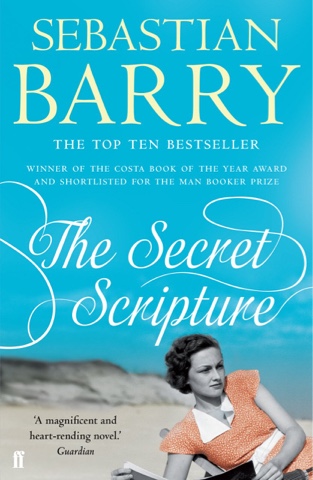
The Secret Scripture, by Sebastian Barry

This is the moving story of Roseanne McNulty who has spent many decades in a mental institution. Desperately sad and very moving, it is also utterly compelling. The reader simply has to find out what happened to Roseanne and how she ended up in the mental institution. And Barry's prose is beautiful. 

The Picture of Dorian Gray, by Oscar Wilde

A chilling classic. I am sure you are all familiar with the story line... The painting in the attic grows old, while Dorian Gray himself stays young. Definitely worth a read though as we go on a tortuous journey of guit and self discovery with the protagonist. It is also very short, so it is a classic you can tick off very quickly!

History of the Rain, by Niall Williams

This book is a glorious exploration of the English language and the impact of literature on our lives. Ruth is dying, confined to bed and desperate to find out her father's story, through family history and the incredible number of books he owns. Niall Williams writes beautifully- many pages were reread simply to savour his turn of phrase. There are many tragedies in this book and it is very sad, but there is also a good deal of humour. The people and places of the west of Ireland are so well captured. It is an affectionate and memorable novel.

The Thing About December, by Donal Ryan

This is a very touching and poignant novel that takes us through a year in the life of Johnsey, a man a little different and apart from everyone else, struggling to find his place in the world after the deaths of his parents who had always protected him from the harsher realities of life. Set admidst the boom years of the Celtic Tiger Johnsey is pursued by people desperate to buy up the land he has inherited while he flounders in grief and self doubt. The characters are beautifully drawn and there are moments of almost heartbreaking tenderness. The sense of time and place is a real feature too Ryan really captures the minutiae of life in small town Ireland.
The Wonder, by Emma Donoghue

Truly gripping, this is the story of a girl in the Irish Midlands in the middle of the 19th century who has become a wonder through having eaten nothing for months. An English nurse arrives in the village, employed to keep a watch on the girl and finds herself battling to save her life. The tension in this novel is incredible and keeps the reader turning the page, long into the night....
Rachel's Holiday, by Marian Keyes

It's easy to dismiss Marian Keyes work as "chick lit" and pass it over, but you would be missing out. Her writing is laugh out loud funny and her characters are entirely believable. This book is the story of Rachel, whose use of recreational drugs has got out of hand, and her time spent in rehab. It is funny, moving, and quintessentially Irish whilst also opening the reader's eyes to the nature of addiction and challenging stereotypes about addicts. When you have read it you will want to seek out Keyes' other books about the Walsh family. 
Dubliners by James Joyce

I studied this book at A-level, and although it is a book that benefits from being "studied", it is probably the most accessible of Joyce's work and a good starting point. If you have a study guide on hand at the same time, you may get more from it, particularly with regard to the complex metaphors and imagery but it is also worth just getting lost in the words and transported to another time and place - Dublin in the early 20th century. It is essentially a collection of short stories but there are recurring themes and characters that crop up in more than one story. It seems bleak and there are not many likeable characters, but if you want to give Joyce a go, then this is a good place to start.

The Woman who Walked into Doors and Paula Spencer by Roddy Doyle

These two books are fantastic, both as an extended character study of the eponymous Paula Spencer and as a social history of working class Dublin in the 80s, 90s and 2000s. When we first meet Paula she is an alcoholic victim of domestic abuse and the books take us on her journey as she begins to recover from both. It is an amazing achievement by Doyle to take on the voice of this female character so completely. The subject matter is fairly bleak, but there is hope and Paula's indomitable character shines through. 
And I am hearing such good things about the gritty Dublin Murder Squad series by Tana French that they are right up there on my to-read list. 
Which Irish books would you recommend?

Book Review: Nora Webster by Colm Toibin


This gentle novel tells the story of Nora Webster who finds herself widowed in small town Ireland in the late 1960s when she is only in her mid-forties.

 It is a character driven novel, fans of fast paced thrillers might be disappointed, but I certainly was not. Nora is a lovely character, likeable and entirely believable and it is a joy to spend time in her company. I would say that Nora becomes like a friend as you read the book, but it is more than that as the portrait of her life is so intimate the reader knows more about her than she would ever confide to her friends. 

Toibin writes beautifully and the details of small town life in Ireland are vividly brought to life. The cast of supporting characters are equally well drawn and animated - while you are reading you really feel that you could be living in this community, amongst these people.  

Through her interactions with her four children, her aunt, her sisters and her late husband's family we share in Nora's grief and go on a liberating journey of self-discovery alongside her. After more than twenty years of marriage she finds herself alone and her loneliness and grief are at times heartbreaking but gradually Nora learns to be her own person, answer to no-one and pursue her own interests without wondering what others will think of her. There are many moments of humour in the novel, particularly when describing the other residents of Enniscorthy and its many "local characters" and we also learn about Irish social history during the late 1960s / early 1970s. The result is a novel about grief and self discovery, but also about the place of women in society, the role of the Chruch in society and what it means to be a woman, a wife and a mother.

It is an intimate, powerful and ultimately uplifting book, although it is never trite. I loved it and now that I have finished I definitely miss Nora. Read it and enjoy being totally immersed in the thoughts of another person. Fantastic.