Wednesday, 24 May 2017

Book Review: Stay With Me, by Ayobami Adebayo

This is the only book I have read (so far) from the shortlist of this year's Baileys Prize for Women's Fiction, and is the debut novel of this young Nigerian author. 

Set against the backdrop of social and political upheaval in 1980s Nigeria (with occasional flashes forwards to the early 21st Century) this novel tells the story of the marriage of Yejide and Akin, two young people who meet and marry at university. Despite being deeply in love their marriage is not blessed with a child and pressure is mounting on Yejide, from her in-laws,to provide them with a grandchild. Wider pressure from society grows too and their marriage comes under increasing strain. 

Although Yejide is the main character the story alternates between chapters from her viewpoint and that of her husband, Akin, and it is Akin's chapters that reveal the most surprises to the reader. His chapters are important for the plot and moving the story forward, whereas Yejide's chapters are important for character development and the emotional involvement of the reader. And this is certainly an emotional book. Yejide is a likeable character and the reader is drawn completely into her world and her head. We share in her love, her hope, her disappointment and her grief, and these powerful emotions are explored over and over again throughout the novel. 

The setting in Nigeria in the 1980s and present day provides interesting insights into Nigerian life, particularly the contrast between contemporary Western lifestyles and values and more traditional Nigerian lifestyles and the way in which these two can mix. There is also some interesting information about the political background of Nigeria but the real joy of this novel is Yejide's story and the emotions it evokes in the reader - a meditation on love, grief and the role / value of women in society. Powerful and emotional it is definitely worth a read. It will stay with you (and, as an added bonus, the hardback edition of the book is really beautiful too - I especially love the yellow pages!).


Friday, 12 May 2017

4 (very) long books that are definitely worth the effort...

Long books can be a little daunting. Especially if you get your reading material from the library, where most of the new books are in hardback. I borrowed a couple of these titles from the library and actually had to return them unread because the hardback copies were just too unwieldy! I often fall asleep holding my book and there was no way I wanted to get bashed in the face by one of these bad boys. But I got round to reading them eventually and believe that you should too as they are completely and utterly worth the effort. And yes, there is effort involved in reading books this long - not only the time commitment but also the physical effort...if you like to read lying on your back, just holding the book up can be tricky and you reach a certain point in the book where keeping it open with your thumb becomes really tiring! And books of this length are less portable - it was a struggle to fit my copy of A Little Life inside my handbag. Persevere though - you will be rewarded!

A Little Life, by Hanya Yanagihara (720 pages)

I have just finished reading this book and it really should come with a warning. It is one of those books that consumes you completely - you cannot get the characters and their lives out of your head. On the surface, the novel is not about much. It follows the lives and friendship of 4 college classmates over nearly more than 30 years as they leave college, move to New York and begin and develop careers and relationships. The pivotal character of the novel is Jude, a lawyer haunted by his traumatic past. All his interactions with the other characters are shaped by his past and his friends' lives are also profoundly affected. It is a heart-wrenching novel that will leave you raw and weeping as it explores love, grief, the nature of happiness and the legacies of childhood. Have some tissues handy.

Wolf Hall, by Hilary Mantel (674 pages)

This novel won the Booker Prize in 2009. It is another book to get totally immersed in and transported back to the court of Henry VIII,where we follow the rise of Thomas Cromwell, from the humble beginnings of a blacksmith's son, to becoming one of the most powerful men in England, as advisor to the King. The historical detail and the beautiful descriptive writing mean that Tudor London really does come alive. The novel is written almost as Cromwell's stream of consciousness and that, coupled with the authentic language and turns of phrase from the sixteenth century, can make it difficult to get into, but again persevere because it is worth it. This kind of total immersion in another time and place is what I crave when reading and Mantel achieves it. I really felt like I was living in Tudor London. A fascinating insight into a turbulent period in history and a look at power and the desires, dilemmas and corruptions associated with it. A worthy Booker winner.

The Luminaries, by Eleanor Catton (848 pages)

Another Booker Prize winner, this time from 2013. This is a huge novel in both length and scope. It is set in New Zealand during the gold rush of the 1860s. A very clever plot structure opens with a man stumbling upon a secret meeting of twelve men all gathered together to tell their stories. It turns out that all these stories are linked (often through many intricate layers) and a compelling mystery is gradually revealed. It is a page turner - you really want to get to the bottom of this mystery (even the nature of the mystery is not immediately apparent - is it a murder, disappearance, fraud?) and the way it is revealed is original and intelligent. The structure of the novel is important, but does not overpower it. The writing is eloquent and highly evocative of time and place. A real triumph!


A Suitable Boy, by Vikram Seth (1504 pages)

I am pretty sure this is the longest novel I have ever read, but it does not drag or seem overly long. In fact I did not want it to end. The reading experience was fantastic, and the writing style made it a surprisingly gentle and easy read. There is a huge cast of characters but none of them seems extraneous and the setting of post independence India as the first free elections are looming is so beautifully evoked that I really felt I was living there alongside these characters and I truly felt bereft when I had finished. The title of the novel is important as we follow Lata's search for her ideal husband, both according to her own ideals and what her family considers suitable. The political backdrop adds another dimension to novel as we learn about the tensions between different classes, castes and religions in this new nation struggling to find its place in the world. It is truly fantastic writing and a book to be savoured. It may be long, but it will make you laugh out loud, and it will move you to tears, and you will not want it to end.

What very long novels that are too good to miss would you add to this list?

Monday, 1 May 2017

Book Review: Asking For It, by Louise O'Neill

I have seen this book described as a book that everyone should read. And I agree. It is a very uncomfortable read, but the subject matter is so important that everyone should read it. And it is totally unputdownable - the kind of book that you have to read in one sitting.

The book is set in a small town in south-west Ireland. The kind of place where everyone knows everyone else and their business and everyone has plenty of opinions to share on the subject of other people's business. The main character, 18 year old Emma, is pretty, popular and very powerful within her social circle. Then one summer evening, after a house party she is raped and her world and life are changed forever. In fact, the whole town is changed forever. In the age of social media, this rape becomes a public show and everyone in the town knows about it and has an opinion about it. 

The book is divided into two parts: the first part introducing Emma and her friends, describing the events leading up to the fateful party and culminating in the rape itself and its immediate aftermath. Be warned, there are some very graphic and disturbing scenes. When we meet Emma she is not a likeable person - selfish, self absorbed and manipulative - but I think this has been done deliberately to make the reader question their idea of a victim, and it certainly makes food for thought. The second part of the book details the huge fallout from this night and shows how Emma's life, and that of her family, is destroyed by the rape. 

This is a shocking and disturbing book but it is a very important one, because it makes the reader question not only their idea of a victim, but also rape culture in general, the issue of consent, and how victims of rape are treated by society. Very thought provoking - the kind of reading material that should be required reading for all older teenagers. It left me feeling emotionally drained and very, very sad. It is not a good reflection on society and society's attitudes to women and it makes me worried for my daughters, but the more people that read it, the more people will think about these issues and question their ideas and beliefs. So please read it. And then get everyone you know to read it.


Thursday, 30 March 2017

Book Review: The Dry, by Jane Harper


This is a very good read. I read it in one sitting - it truly is one of those books that is impossible to put down!

The book opens with Aaron Falk, a Melbourne police officer, returning to his hometown in the Australian outback after a twenty year absence, to attend the funeral of his childhood best friend Luke Hadler. Luke, his wife and their young son were all found shot dead and it looks as if the only person who could have been responsible is Luke himself. The town is in the grip of a fierce drought and tensions are running high throughout the community as farms and local businesses are beginning to fail. At the request of Luke's parents Aaron begins to dig around, looking into the deaths, but he is keeping secrets of his own from twenty years before - secrets that he thought only he and Luke shared. The more time he spends in the town, the more it becomes apparent that these long buried secrets are threatening to resurface. Do they have any bearing on what happened to the Hadlers? 

The setting is what sets this apart from other thrillers and Jane Harper does a fantastic job of bringing the Australian outback to life and evoking the never ending heat and isolation. She shows how this heat and isolation can lead to incredible tension and frustration...which is a great for a thriller like this - just about every character in the book is a potential suspect as the drought makes people behave in ever more threatening and bizarre ways! Small town life with all it's gossip and small mindedness, coupled with the worries of life lived at the mercy of the climate make for high emotions and unusual behaviour all round. 

The plot is fast paced and full of twists and turns, several times Harper managed to lead me completely up the wrong path, having me suspect various people in turn and for a chapter or so I would be certain of that person's guilt before a plot twist led me off in another direction. Masterful stuff. So often I feel let down by the ending of novels like this, feeling either that the motive was utterly ridiculous or the character responsible for the crime was one that had hardly been mentioned in the book before and was just introduced almost incidentally to be the culprit, but this was not the case with The Dry. The ending was entirely plausible and a surprise right up until Falk himself begins to work it out.

An unusual and well written thriller that I would highly recommend.

Wednesday, 29 March 2017

Why I love Maggie O'Farrell's books

I have just finished reading The Hand That First Held Mine and like all the Maggie O'Farrell books that I have read, I loved it. I have only read 4, but they are all excellent and I would recommend them to anyone. If my to-read list was not so large and out of control, I would probably have read more of her books by now! 

O'Farrell writes about a wide range of topics, but the thing that sets her work apart is the incredibly real portrayal of human emotions. After reading one of her books I feel raw and emotionally drained, but I mean that in a good way! Her characters are fantastically well drawn - that is why you feel their emotions so keenly. And there is usually an element of mystery and a fast-paced plot. What's not to like? 

So the ones I have read are:

The Hand that First Held Mine - a story following the lives of two women, living in the same city 50 years apart. In the 1950s, Lexie runs away to London looking for excitement, meets the love of her life and carves out a new life for herself as a journalist. In present day London, Elina has just become a mother and we share the first few life-changing weeks of motherhood with her. These parallel stories have fleeting moments of connection, mainly through the places in London that the characters frequent but as the novel goes on we realise that the two women are connected in other ways too. This novel won the Costa Novel Award in 2010 and is a riveting read.


After You'd Gone  is one of those books that totally consumes you. You will live in this book while you are reading it. It is an outstanding and heart-wrenching portrayal of love and grief and without doubt my favourite of O'Farrell's books. It is hard to believe that this was her first novel.


The Vanishing Act of Esme Lennox - Iris receives a letter informing her that a great-aunt she knew nothing about is about to be released from a psychiatric institution. Iris sets out to discover the truth about this mysterious old lady who seems to have been erased from the family history. The novel is cleverly constructed with the truth gradually being revealed through 3 different viewpoints. Another very moving page turner from O'Farrell.


Instructions for a Heatwave has a mystery at its heart. One morning Robert Riordan tells his wife Gretta that he is going out to buy a newspaper and he never returns. The search for Robert brings his children back home and gradually many skeletons are released from closets as the family pulls together to find him. I loved it because the family is so wonderfully real and believable. Each character is flawed but likeable and the Irishisms are spot-on. It is also utterly compelling - just like his family the reader is desperate to both find Robert and discover why he disappeared. Excellent.


Which Maggie O'Farrell books have you read? And which ones are your favourites?


Monday, 20 March 2017

Book Review: Small Great Things by Jodi Piccoult


I have never read any books by Jodi Piccoult before and in fact I have been guilty of a little prejudice against her, dismissing her as"trashy". Ironic therefore that this book which encouraged me to transcend that prejudice and pick up one of her books, is in fact all about prejudice! And I was definitely wrong about Piccoult- her writing is far from trashy and I am sure I will go on to read more of her work.

So what convinced me to try this particular book? I was hooked by the hype. I had even seen this book described as "To Kill a Mockingbird for the 21st Century". Now this is dangerous territory. "To Kill a Mockingbird" is my favourite book of all time and holds a very special place in the heart of many people. So any book making this kind of claim had better be good - very good. But it certainly works as a strap line to get people to pick up the book in the first place...

Ruth is a black midwife who has been working at the same hospital for twenty years. One day a white supremacist makes a request (granted by the hospital) that no black personnel are to care for his baby and Ruth is immediately removed from the baby's care. After a routine procedure the baby dies and Ruth is held responsible, suspended from her job and eventually tried for the baby's murder. We follow the events leading up to the baby's death, the preparation for the trial, the trial itself and the aftermath through the eyes of three different narrators : Ruth herself; the baby's father, Turk; and Ruth's lawyer, Kennedy. 

The plot is certainly compelling. I couldn't put it down and found myself reading long into the night. And the characters are on the whole, well drawn. Ruth in particular is a likeable character that the reader immediately sympathises with. We really want things to work out well for her. This novel is predominantly about prejudice and the experience of being black in America and Ruth does a good job in getting this message across to me as the reader and helping me to question my own beliefs and actions and examine my own white privilege. In this respect it reminded me very much of "Americanah" by Chimamanda Ngozie Adiche. And I was very glad that I had recently read "Homegoing" by Yaa Gyasi which helps to explain why race is such an issue in the USA and illustrates amazingly well how the effects of slavery reverberate down through the generations and are still raw and relevant today. 

Whilst I did enjoy the book and liked the fact that it was though provoking and made me examine my own conscience, I did feel that it had a couple of large flaws. The ending I felt was trite and contrived and far too much of a neat ending, with all strands tied up in a neat little bow and everyone ending up a better person. And I think this is why comparisons to "To Kill A Mockingbird " do not work - the outcomes of that book are not neat and positive and the child as narrator stops any events from seeming trite. In addition, the epilogue of "Small Great Things" seems almost rushed and the character development is non-existent so what happens to those characters is very difficult to believe. The ending of the book was a real let down for me.

However, that said, I would recommend it because it was fast paced, emotionally involving and thought provoking and an interesting dilemma to explore. It is a good book, but definitely not a great book and will not endure in the way of "To Kill a Mockingbird ".


Monday, 13 March 2017

An eclectic selection of Irish fiction for St Patrick's Day

Ireland certainly has a rich literary tradition. Knowing where to start on a booklist of Irish fiction is hard, knowing where to stop is even harder.... But here is a round - up of some great reads either set in Ireland, or written by Irish authors.

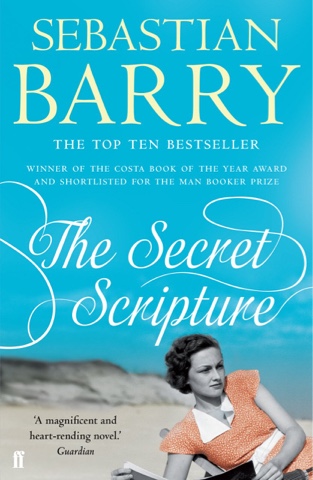
The Secret Scripture, by Sebastian Barry

This is the moving story of Roseanne McNulty who has spent many decades in a mental institution. Desperately sad and very moving, it is also utterly compelling. The reader simply has to find out what happened to Roseanne and how she ended up in the mental institution. And Barry's prose is beautiful. 

The Picture of Dorian Gray, by Oscar Wilde

A chilling classic. I am sure you are all familiar with the story line... The painting in the attic grows old, while Dorian Gray himself stays young. Definitely worth a read though as we go on a tortuous journey of guit and self discovery with the protagonist. It is also very short, so it is a classic you can tick off very quickly!

History of the Rain, by Niall Williams

This book is a glorious exploration of the English language and the impact of literature on our lives. Ruth is dying, confined to bed and desperate to find out her father's story, through family history and the incredible number of books he owns. Niall Williams writes beautifully- many pages were reread simply to savour his turn of phrase. There are many tragedies in this book and it is very sad, but there is also a good deal of humour. The people and places of the west of Ireland are so well captured. It is an affectionate and memorable novel.

The Thing About December, by Donal Ryan

This is a very touching and poignant novel that takes us through a year in the life of Johnsey, a man a little different and apart from everyone else, struggling to find his place in the world after the deaths of his parents who had always protected him from the harsher realities of life. Set admidst the boom years of the Celtic Tiger Johnsey is pursued by people desperate to buy up the land he has inherited while he flounders in grief and self doubt. The characters are beautifully drawn and there are moments of almost heartbreaking tenderness. The sense of time and place is a real feature too Ryan really captures the minutiae of life in small town Ireland.
The Wonder, by Emma Donoghue

Truly gripping, this is the story of a girl in the Irish Midlands in the middle of the 19th century who has become a wonder through having eaten nothing for months. An English nurse arrives in the village, employed to keep a watch on the girl and finds herself battling to save her life. The tension in this novel is incredible and keeps the reader turning the page, long into the night....
Rachel's Holiday, by Marian Keyes

It's easy to dismiss Marian Keyes work as "chick lit" and pass it over, but you would be missing out. Her writing is laugh out loud funny and her characters are entirely believable. This book is the story of Rachel, whose use of recreational drugs has got out of hand, and her time spent in rehab. It is funny, moving, and quintessentially Irish whilst also opening the reader's eyes to the nature of addiction and challenging stereotypes about addicts. When you have read it you will want to seek out Keyes' other books about the Walsh family. 
Dubliners by James Joyce

I studied this book at A-level, and although it is a book that benefits from being "studied", it is probably the most accessible of Joyce's work and a good starting point. If you have a study guide on hand at the same time, you may get more from it, particularly with regard to the complex metaphors and imagery but it is also worth just getting lost in the words and transported to another time and place - Dublin in the early 20th century. It is essentially a collection of short stories but there are recurring themes and characters that crop up in more than one story. It seems bleak and there are not many likeable characters, but if you want to give Joyce a go, then this is a good place to start.

The Woman who Walked into Doors and Paula Spencer by Roddy Doyle

These two books are fantastic, both as an extended character study of the eponymous Paula Spencer and as a social history of working class Dublin in the 80s, 90s and 2000s. When we first meet Paula she is an alcoholic victim of domestic abuse and the books take us on her journey as she begins to recover from both. It is an amazing achievement by Doyle to take on the voice of this female character so completely. The subject matter is fairly bleak, but there is hope and Paula's indomitable character shines through. 
And I am hearing such good things about the gritty Dublin Murder Squad series by Tana French that they are right up there on my to-read list. 
Which Irish books would you recommend?