Friday, 22 June 2018

Book Review: Where the World Ends, by Geraldine McCaughrean


Where the World Ends, by Geraldine McCaughrean has just been awarded the 2018 Carnegie Medal. My eleven-year-old daughter and I have both read and enjoyed it, although my daughter found it very scary, and I can see why. I am not sure of McCaughrean's target audience with this book and it has been categorised as teenage fiction in our local library. Having read it, I think this is probably a wise move as some of the content is quite graphic when describing injuries sustained- it could be described as gruesome in places - and the categorisation as teenage fiction means younger readers cannot check the book out on their own card, so parents are alerted that content may be unsuitable for some younger readers.
That said, this is a fabulous book, capable of totally transporting the reader to another time and place. For readers of my daughter's age and young teenagers this is a time and place so completely alien to their own experiences that this in itself is remarkable and makes for a magical reading experience. The setting is the archipelago of St Kilda, the most remote habitable islands in Britain, in the 1720s. A group of 9 boys of varying ages and 3 men are sent from the island of Hirta to Warrior Stac (basically a large lump of rock 4 miles out to sea) in order to hunt sea birds for their feathers, oil and meat. This expedition takes place every year and most of the boys have done the trip before. They are usually collected 3-4 weeks later. This particular year, the boat does not return to collect them and summer becomes autumn, which in turn becomes winter, and the weather worsens and the food begins to run out as they are marooned indefinitely on the Stac.
By turns terrifying, heartwarming, heartbreaking and even  humorous, we learn of the ways the boys cope and learn to survive in their extraordinary situation and we also learn a little of what everyday life would have been like on this remote archipelago 300 years ago. Fascinating, and a real page turner - a compelling adventure story and a study of group dynamics under stress.
This is fiction based on events that actually happened, and I think this is what made it even more frightening for my daughter, but it also makes for very poignant reflection on the hardships of life 300 years ago.
This is a deserved winner of a prize that aims to celebrate "outstanding books written in English for children and young people" as it has the power to offer total escapism whilst encouraging empathy with a people and way of life previously unimagined, as well as providing enjoyment, learning and the chance to reflect on your own behaviour in group situations. Powerful stuff, beautifully written.

Wednesday, 16 May 2018

Book Review: My Year of Meats, by Ruth Ozeki


My Year of Meats is the second Ruth Ozeki novel I have read ( the first being A Tale for the Time Being, which I loved and wrote about here :http://thisreadingmummy.blogspot.co.uk/2017/01/3-awesome-books-set-in-japan.html ) and I can't recommend it highly enough. The title is eye-catching and unusual and if you are looking for something different this novel does not disappoint. It has a narrative split between 2 women: Jane an American with a Japanese mother and American father, living in the USA and working for a Japanese TV company; and Akiko, the Japanese wife of an executive in the same Japanese TV company who lives in Japan.

Jane is a documentary film maker who lands a job making a TV series filming American families to promote American meat to families in Japan. The production company have a specific idea in mind of a wholesome American wife and family to be portrayed on each show but Jane wants to show her Japanese audience more of the real and diverse America. As the series progresses Jane makes some shocking discoveries about intensive meat production in the USA and becomes intent on exposing this.

Akiko is the unhappy wife of an executive within the production company, who is tasked by her husband with reviewing each episode and cooking the meat dish showcased within it. Her honest reviews cause further deterioration of her already unhappy marriage, but Akiko feels the families shown in the series resonate with her and she is driven to make contact with Jane. Eventually their 2 stories come together.

This book may seem primarily to be a shocking exposure of the flaws of factory farmed meat in the USA (nothing new to me reading in 2018 - still shocking, but not things I didn't know- but I imagine this was totally new to readers when it was published in 1998) but it is so much more than that. It explores the clash of cultures between America and Japan, particularly with regard to food, looks at domestic abuse (some scenes are very hard to read) and how this violence can be condoned and perpetuated by paternalistic societies idealising the submissive wife and is ultimately a shocking, compelling, moving and occasionally funny exploration of love, grief and the experience of growth and finding oneself. Masterfully written, with human and believable characters, this is a novel that stays with you.


Tuesday, 10 April 2018

Book Review: Everything I Never Told You, By Celeste Ng


I realise that I am a little late to the party on this one, as this is a book that everyone was talking about a few years ago, following its publication in 2015, but I have finally read it and I need to talk about it.

It is a while since I have been so moved by a book and so consumed by thoughts of what might have been.

This book opens with the line "Lydia is dead. But they don't know this yet." which is certainly an eye-catching opener. We follow Lydia's family as they report her missing and her body is discovered, and then through the heartbreaking months that follow as they try to understand what happened and come to terms with her death.

Lydia Lee is mixed race with a second generation Chinese father and an American mother. In small- town Ohio of the 1970s this is a big deal and the repercussions of this 'difference' cause problems for all 5 of the Lees. Each member of her family has their own demons to address: Lydia's mother is desperate for Lydia to be different, to confront stereotypes and stand out from the crowd; whilst her father is desperate for her to be liked and fit in as he has always felt like an outsider; her older brother wants to break free from his family; and her younger sister just wants to be loved for herself and not feel she is living in Lydia's shadow.

 The story flits back and forth in time between the present day following Lydia's death, the months leading up to her death, and all the way back to the early days of her her parents' relationship in order to provide insights into what happened to Lydia. This is never confusing and always works well, revealing information subtly to the reader. 

The subplot around their neighbour Jack never really works for me and the revelation concerning him near the end is unconvincing but this is a small point and does not detract from the overall experience. This is a tragic and thought provoking novel exploring themes of identity, growing up, fitting in and finding your place in the world. It also poignantly discusses the nature of love, regret and the sacrifices we make for love. It is an incredibly sad book, but I would wholeheartedly recommend it.

Sunday, 8 April 2018

If you haven't read Hannah Kent's books, you should.

Hannah Kent is a fantastic author, with a rare ability to transport the reader completely to another time and place. I have just finished reading The Good People and cannot stop thinking about it. I read it in the car on a journey through France, with 4 others in the car including 3 children, and despite those distractions I was totally immersed in the world she describes.
Hannah Kent has only written 2 novels and both start from a fascinating point of inspiration - old court reports. She takes a particular character from history, out of these court reports and builds a fictional account of their lives and crimes, with the help of contemporary newspaper reports. And the results are engrossing stories with a crime / mystery at their heart, where the reader needs to discover what happens.
The Good People takes place in rural Ireland in the 1820s and tells the story of Nora Leahy  whose daughter and husband die within months of each other leaving her alone to take care of her crippled grandson, Michael Kelliher. She hires a maid, Mary, to help with this task and together they seek the advice of local "wise woman" Nance Roche. In this case, Nance Roche and Michael Kelliher are the real people mentioned in court reports from Tralee, Co.Kerry, in 1826.
The community these characters live in is very remote and life is hard. Famine and eviction are very real, almost constant threats. Whilst godfearing Catholic people, heavily influenced by the local priest, there is also strong belief in fairies, known as "the Good People" and many rituals are practised to discourage fairy mischief in their lives. Nance Roche is often consulted by villagers who believe she understands the ways of the fairies.
The world described is so different to our own, yet the characters are utterly believable and often likeable. Particularly touching is the relationship between Mary and Michael, the boy she cares for. She begins by being frightened off him, but soon grows to love him.
This is a desperately sad story of a community that has their traditional ways and beliefs come sharply into conflict with the modern world, with tragic consequences. 
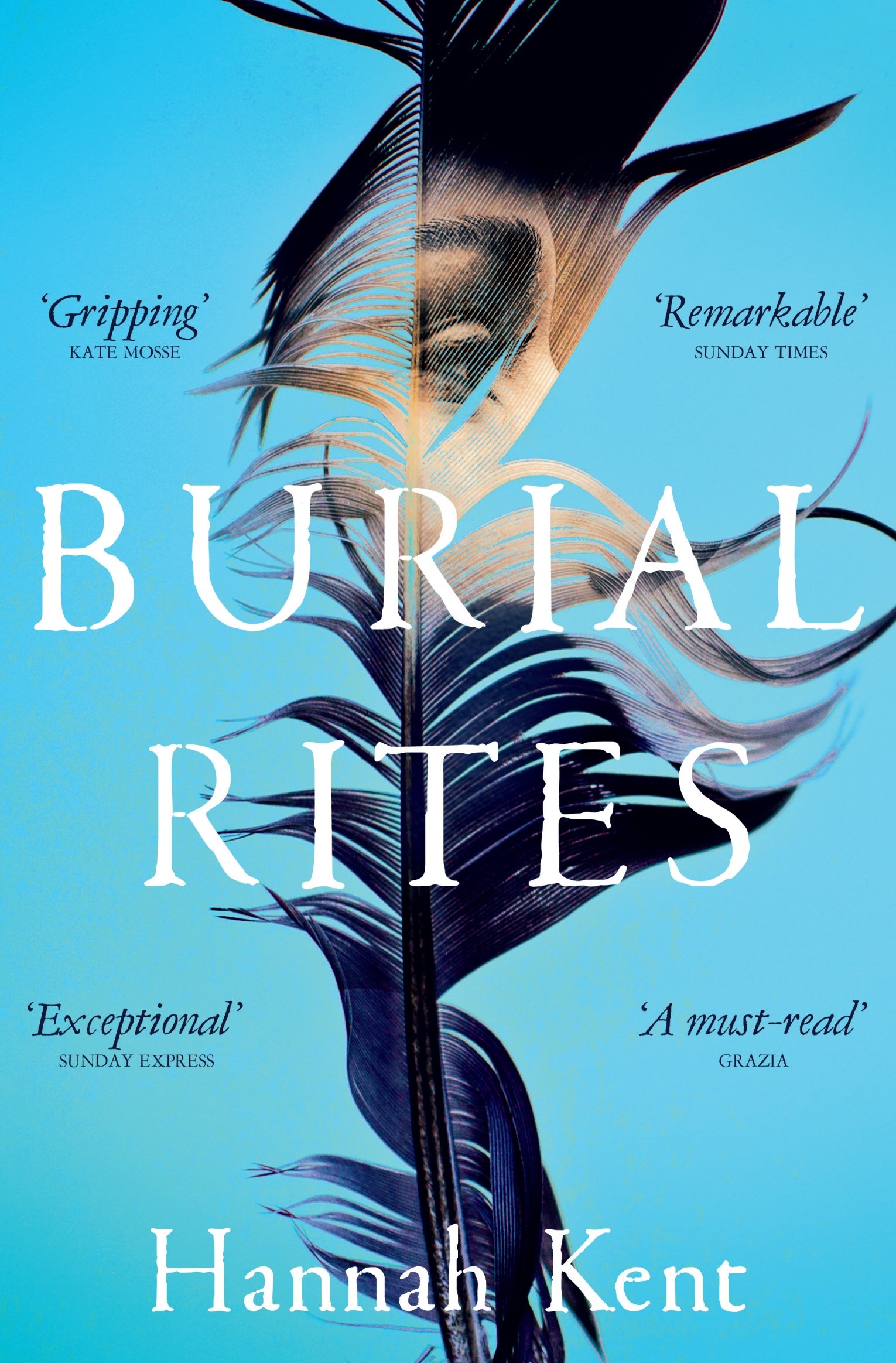
Kent's debut novel, Burial Rites, is also set in the 1820s, but this time in Iceland. It concerns the story of Agnes Magnusdottir, the last woman to be executed in Iceland, who was convicted of murder in 1828. She is given into the reluctant care of a farming family until the sentence can be carried out, and is assigned a trainee minister as her spiritual mentor and the story of her crime is revealed through her meetings with him. Again, the writing is fantastic and the time and place is evoked with incredible intensity. Not a happy story, but a brilliant work of fiction that will totally transport the reader.


I am really hoping that Hannah Kent writes another book soon!

Monday, 26 March 2018

Book Review: Clay, by Melissa Harrison


Clay is quite simply a beautiful book. The writing is hauntingly lyrical and the descriptions of the changing seasons are incredible. Sometimes amazing, detailed descriptions can detract from the plot, but not in this case.

The story tells us about TC, an unhappy 10 year old boy finding solace in the few wild spaces of the city. He loves nature and eventually finds a kindred spirit in Jozef, a Polish immigrant yearning for the land he used to farm, who begins to look out for the boy and pass on his wisdom about the natural world. This unlikely friendship is observed by Sophia, an old lady who has lived most of her adult life on the edge of one of the city's few green spaces and has come to understand and cherish the natural rhythms of the seasons. She is also worried about TC and encourages her sheltered grand-daughter, Daisy to play with him, despite knowing that Daisy's mother would not approve. TC and Jozef discover and delight in a great deal of unlikely wildlife in the heart of the city and observe the microscopic details of their environment with joy and wonder.

As well as being a joyous and beautiful reminder of the importance of green spaces everywhere and the difference contact with nature can make to people's lives, this book examines themes of loneliness, class and urban decay with insight and poignancy. Just fantastic.

Friday, 9 February 2018

Book Review: Miss Smilla's Feeling for Snow, by Peter Hoeg

This is an unusual book - an unusual setting, an unusual character and an unusual plot - and that is what makes it a cracking read. I have heard it described as an early example of Nordic Noir but it is more than that.
It is the only book I have read set in Greenland and Hoeg manages to make the frozen wastelands being described come alive from the page - no mean feat when to most people the landscape is exactly the same for hundreds and hundreds of miles. And that is where Smilla, the protagonist, comes in - she knows snow and ice. She is a Greenlander, latterly exiled to Denmark and it is her knowledge of this vast and surprising landscape which brings it alive for the reader. Smilla is a fabulous character: tenacious, resourceful, philosophical and perhaps a touch lonely, and single minded to the point of obsession. Again, it is a strength of Hoeg's writing that can make the reader identify so completely with this strange yet likeable heroine. 
This is the only book I have read with an Inuit as the main character and the insights into the history and culture of the Inuit people of northern Greenland are fascinating.  
The son of Smilla's neighbour falls to his death one day from the roof of their apartment block in Copenhagen, and Smilla immediately smells a rat - her "feeling for snow" tells her that the footprints in the snow on the roof point to a different explanation to the verdict of accidental death offered by the coroner. She embarks on an investigation which leads her from Copenhagen to the frozen Arctic Ocean as a thrilling, twisting and deadly conspiracy is uncovered. 
This is a compelling read, and an intelligent thriller. The writing is brilliant - poetic and philosophical as Smilla ponders on her 37 years of life and struggles with her own identity. If you love thrillers but want to read something completely different to all the other thrillers out there then I can't recommend this highly enough.


Friday, 10 November 2017

Book Characters that your 2-year-old will love...

Two-year-olds love repetition. They will very happily read the same story over and over again long after it has started to drive the adult reader mad, and can sometimes request exactly the same bedtime story night after night for weeks on end. Although I have sometimes been known to hide books and / or pretend they are lost in order to alleviate this problem (bad mummy!) I have also found 2 less drastic solutions:

Firstly, the library! My two-year old loves the library and she totally gets the idea that she has to return her books in order to borrow more. And since we visit the library every week we have a regular change of favourite stories!

Secondly we find characters my daughter loves. That way we get new stories involving the same characters - a sure fire winner with kids and less repetition for the adult readers. Win-win.

So which characters does my two-year old love right now? There are 2 stand out winners here:

Pip and Posy by Axel Scheffler : a series of books about Pip, a rabbit and Posy, a mouse, two friends who engage in the everyday life of toddlers. They play the same games and take part in the same activities as my two-year-old so she can really relate to them. Each book contains a small drama of the sort that toddlers find really upsetting (for example in The Big Balloon, the ballon bursts and in The Super Scooter, Posy snatches Pip's scooter and rides off on it) and the two friends work together to find a solution. These are fantastic books for talking about emotions and for modelling how to handle those big toddler emotions. There is even a Pip and Posy book about using the potty (The Little Puddle) which has been a big hit in our household lately. These are lovely books with gentle stories of things that toddlers do and the trademark Axel Scheffler illustrations are, as always,bold, colourful and full of interesting details. It is well worth seeking these books out and they are helpfully available as both board books and paperbacks.


Wibbly Pig, by Mick Inkpen : a series of stories about a lovable pig, his stuffed toys and his pig friends. Wibbly is a great character for growing with your child. Some of the books,such as Wibbly Pig Likes Bananas and Wibbly Pig Likes Playing, are great for very young toddlers as they contain very little text (usually just one sentence on each page) but show Wibbly doing all the things toddlers like to do and asking questions to promote discussion and encourage children to voice their opinions. Then there are longer stories and even lift-the-flap books, such as Everyone Hide From Wibbly Pig. My daughter's current favourite is Is It Bedtime Wibbly Pig? because Wibbly finds lots of ways to put off bedtime in exactly the way that my daughter does and she loves to join in with what he says. That is the appeal of Wibbly Pig - he is fun, a little bit cheeky and gets up to all the same things that toddlers do. 


What characters would you recommend for 2-year-olds?